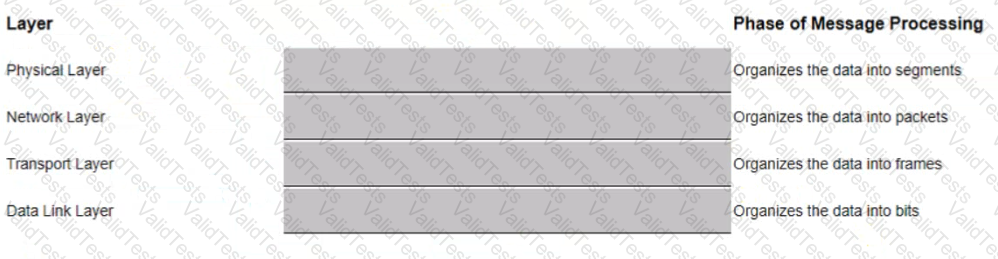
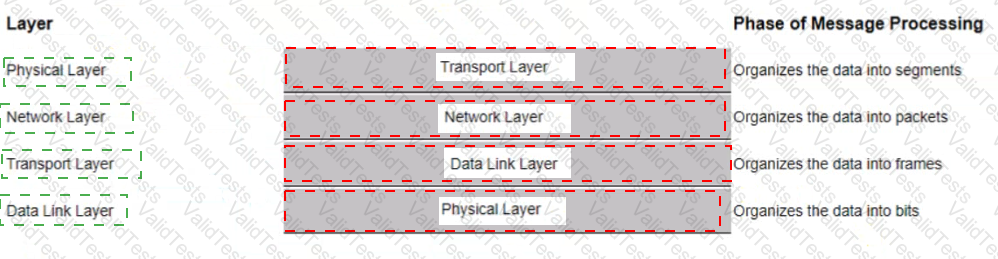
Layer: 1) Physical layer Phase of Message Processing: d) Organize the data into bits
Layer: 2) Data Link layer Phase of Message Processing: c) Organize the data into frames
Layer: 3) Network layer Phase of Message Processing: b) Organize the data into packets
Layer: 4) Transport layer Phase of Message Processing: a) Organize the data into segments
The OSI model divides the networking process into seven layers, each representing a different step of the transmission chain. Each layer has its own function and is responsible for well-defined tasks. User data passes sequentially from the highest layer down through the lower layers until the device transmits it externally. The lowest layer, the physical layer, converts the data into bits that can be sent over a physical medium. The second layer, the data link layer, organizes the bits into frames that can be transmitted over a link between two nodes. The third layer, the network layer, organizes the frames into packets that can be routed across a network of nodes. The fourth layer, the transport layer, organizes the packets into segments that can provide reliable and error-free communication between two end points12. References: 1 https://www.linode.com/docs/guides/introduction-to-osi-networking-model/ 2 https://en.wikipedia.org/wiki/OSI_model
Contribute your Thoughts:
Chosen Answer:
This is a voting comment (?). You can switch to a simple comment. It is better to Upvote an existing comment if you don't have anything to add.



Submit