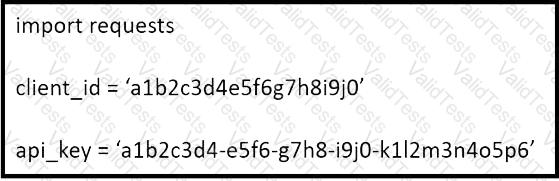
The API key is used for HTTP authentication when working with APIs, including https://api.amp.cisco.com/v1/computers. It ensures that the user or system making the API request is authenticated and authorized to access the resources requested. The image you sent shows a Python code snippet that imports the requests module, assigns a client ID and an API key to variables, and uses them to make an API call. The API key is passed as a header parameter in the requests.get() function, which is a common way of implementing HTTP authentication. The other options are not correct because they do not describe the role of the API key. The client ID is a different parameter that identifies the user or system making the request, but it does not authenticate them. HTTP authorization is a process of granting or denying access to resources based on the user’s identity and permissions, but it is not the same as authentication. Importing requests is a Python statement that loads the requests module, which is a library for making HTTP requests, but it has nothing to do with the API key. References :=
Some possible references are:
Cisco AMP for Endpoints API
requests - HTTP for Humans
HTTP authentication - MDN Web Docs
Contribute your Thoughts:
Chosen Answer:
This is a voting comment (?). You can switch to a simple comment. It is better to Upvote an existing comment if you don't have anything to add.



Submit