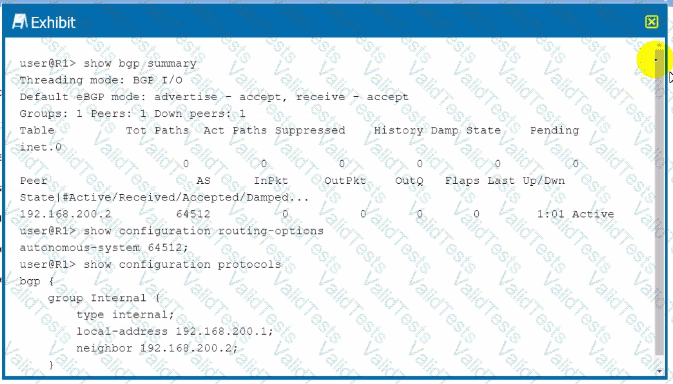
The exhibit shows that the BGP session state is "Active," which generally indicates that the router is trying to establish a BGP session but has not received a response. One common cause for this issue is that there is no route to the BGP neighbor's address. Since the routers are using internal BGP (iBGP) and they are in the same AS, the AS number does not need to be unique, and a next-hop self policy is not strictly required for iBGP. The router-id is usually automatically determined and does not need to be explicitly set.
[References:, Juniper Networks documentation on BGP: Troubleshooting BGP, ]
Contribute your Thoughts:
Chosen Answer:
This is a voting comment (?). You can switch to a simple comment. It is better to Upvote an existing comment if you don't have anything to add.



Submit