Pre-Summer Special Limited Time 70% Discount Offer - Ends in 0d 00h 00m 00s - Coupon code: validbest

Pass the EMC Storage Administrator D-PVM-OE-01 Questions and answers with ValidTests

Exam D-PVM-OE-01 All Questions
Exam D-PVM-OE-01 Premium Access

View all detail and faqs for the D-PVM-OE-01 exam

Viewing page 3 out of 5 pages
Viewing questions 21-30 out of questions
Questions # 21:

On a PowerMax or VMAX Family array, what is the default Dynamic I/O distribution mode setting when a Storage Group is associated with Host I/O Limits?

Options:

A.

Balanced

B.

Never

C.

On Failure

D.

Always

Questions # 22:

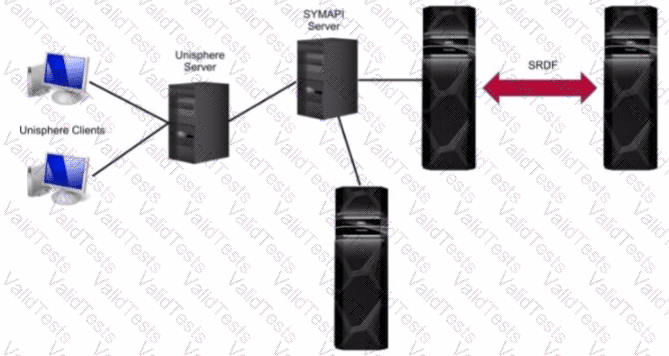
Refer to the exhibit.

Question # 22

What is the Unisphere for PowerMax deployment option pictured?

Options:

A.

Embedded

B.

Either remote or local

C.

Remote

D.

Local

Questions # 23:

A company plans to install a dual-brick PowerMax 2000 system in a third-party rack. How many rack units must be reserved in the rack?

Options:

A.

20

B.

30

C.

40

D.

10

Questions # 24:

Your organization is preparing for a major software update, and it is crucial to ensure data integrity during this process. As a system administrator, create a secure snapshot named "Stor1" from the storage group "StorGroup1." The snapshot cannot be deleted for two days to safeguard against any potential data loss during the update.
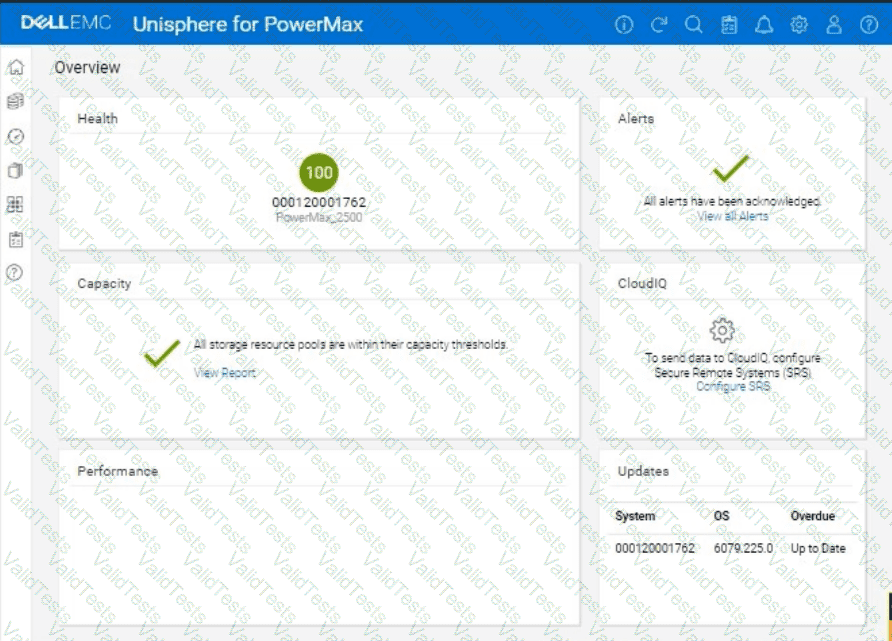
Question # 24

Using the simulator, complete the operation.

Options:

Questions # 25:

How is the Host I/O served after running the Non-Disruptive Migration cutover command?

Options:

A.

Host I/O sent to the new storage system is replicated to the old storage system using SRDF Pass-Through

B.

Host I/O is sent only to the old storage system and replicated to the new storage system using SRDF/S

C.

Host I/O is sent only to the new storage system and replicated to the old storage system using SRDF/S

D.

Host I/O sent to the old storage system is replicated to the new storage system using SRDF Pass-Through

Questions # 26:

How does Solutions Enabler use Gatekeepers to pass commands to the PowerMax array?

Options:

A.

Automatically creates the Gatekeeper and unlocks the device. Processes the system commands; locks and deletes the Gatekeeper

B.

Obtains the Gatekeeper and locks the device. Processes the system commands and unlocks the device

C.

Obtains the Gatekeeper and unlocks the device Processes the system commands and locks the device.

D.

Automatically creates the Gatekeeper and locks the device Processes the system commands; unlocks and deletes the Gatekeeper.

Questions # 27:

A systems administrator wants to move an application to VMAX3 storage. The application being migrated has no performance information available, including response time and average I/O size.

Based on Dell Technologies’ recommendations, which service level should be assigned?

Options:

A.

Gold

B.

Optimized

C.

Bronze

D.

Diamond

Questions # 28:

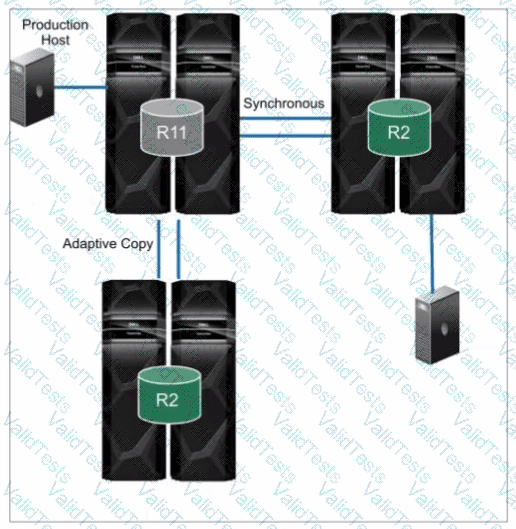
Refer to the exhibit.

Question # 28

What is the topology shown1?

Options:

A.

Cascaded SRDF

B.

SRDF/Star

C.

SRDF/Metro

D.

Concurrent SRDF

Questions # 29:

An administrator is managing two PowerMax arrays that are located in two different data centers. The data centers are 550 km apart and are connected by a high bandwidth network link. The administrator wants to replicate data between the two arrays and achieve the lowest RPO

When using SRDF. which mode meets this requirement?

Options:

A.

Asynchronous

B.

Adaptive Copy

C.

Metro

D.

Synchronous

Questions # 30:

What information would you expect to see under the System > Hardware view on a newly installed Unisphere for PowerMax deployment on 2000 and 8000 series arrays?

Options:

A.

Capacity, performance, and protection

B.

Provision, protect and set host I/O limits

C.

Front-end director, back-end director, and RDF

D.

10 Profile, performance thresholds, and anomaly detection

Viewing page 3 out of 5 pages
Viewing questions 21-30 out of questions