When evaluating third-party applications, which of the following is the GREATEST responsibility of Information Security?
Accept the risk on behalf of the organization.
Report findings to the business to determine security gaps.
Quantify the risk to the business for product selection.
Approve the application that best meets security requirements.
According to the CISSP All-in-One Exam Guide1, the greatest responsibility of Information Security when evaluating third-party applications is to quantify the risk to the business for product selection. This means that Information Security should assess the potential impact and likelihood of threats and vulnerabilities associated with the applications, and communicate the results to the business stakeholders who are responsible for making the final decision. Information Security should not accept the risk on behalf of the organization, report findings to the business without providing risk analysis, or approve the application that best meets security requirements without considering the business needs and objectives.
Which Web Services Security (WS-Security) specification handles the management of security tokens and the underlying policies for granting access? Click on the correct specification in the image below.
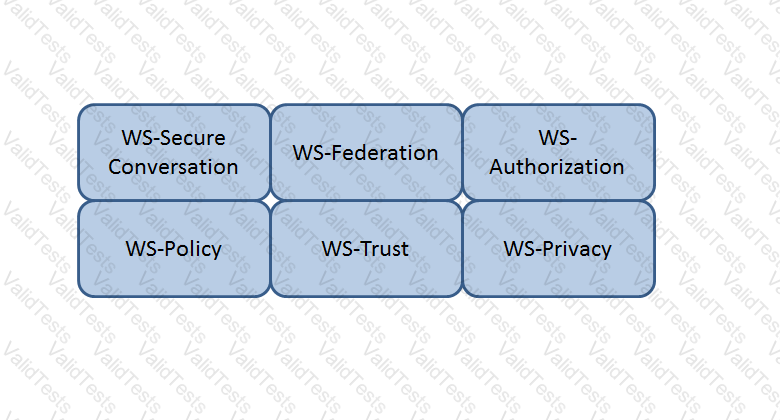
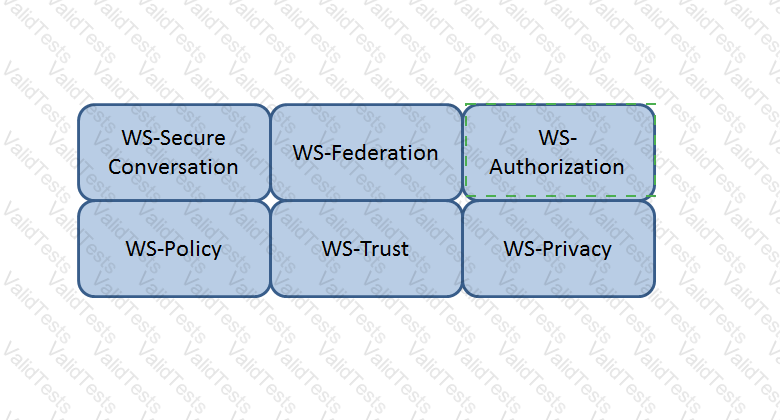
WS-Authorization
Which of the following entities is ultimately accountable for data remanence vulnerabilities with data replicated by a cloud service provider?
Data owner
Data steward
Data custodian
Data processor
The entity that is ultimately accountable for data remanence vulnerabilities with data replicated by a cloud service provider is the data owner. A data owner is a person or an entity that has the authority or the responsibility for the data or the information within an organization, and that determines or defines the classification, the usage, the protection, or the retention of the data or the information. A data owner has the obligation to ensure that a third party provider is capable of processing and handling data in a secure manner and meeting the standards set by the organization, as the data owner is ultimately accountable or liable for the security or the quality of the data or the information, regardless of who processes or handles the data or the information. A data owner can ensure that a third party provider is capable of processing and handling data in a secure manner and meeting the standards set by the organization, by performing the tasks or the functions such as conducting due diligence, establishing service level agreements, defining security requirements, monitoring performance, or auditing compliance. References: CISSP All-in-One Exam Guide, Eighth Edition, Chapter 2, page 61; Official (ISC)2 CISSP CBK Reference, Fifth Edition, Chapter 2, page 67
A company was ranked as high in the following National Institute of Standards and Technology (NIST) functions: Protect, Detect, Respond and Recover. However, a low maturity grade was attributed to the Identify function. In which of the following the controls categories does this company need to improve when analyzing its processes individually?
Asset Management, Business Environment, Governance and Risk Assessment
Access Control, Awareness and Training, Data Security and Maintenance
Anomalies and Events, Security Continuous Monitoring and Detection Processes
Recovery Planning, Improvements and Communications
According to the NIST Cybersecurity Framework, the control categories that the company needs to improve when analyzing its processes individually are Asset Management, Business Environment, Governance and Risk Assessment. These control categories are part of the Identify function, which is one of the five core functions of the NIST Cybersecurity Framework. The Identify function is the function that provides the foundational understanding and awareness of the organization’s systems, assets, data, capabilities, and risks, as well as the role and contribution of the organization to the critical infrastructure and the society. The Identify function helps the organization to prioritize and align its cybersecurity activities and resources with its business objectives and requirements, as well as to establish and maintain its cybersecurity policies and standards. The Identify function consists of six control categories, which are the specific outcomes or goals that the organization should achieve for each function. The control categories for the Identify function are:
Asset Management: The data, personnel, devices, systems, and facilities that enable the organization to achieve business purposes are identified and managed consistent with their relative importance to organizational objectives and the organization’s risk strategy.
Business Environment: The organization’s mission, objectives, stakeholders, and activities are understood and prioritized; this information is used to inform cybersecurity roles, responsibilities, and risk management decisions.
Governance: The policies, procedures, and processes to manage and monitor the organization’s regulatory, legal, risk, environmental, and operational requirements are understood and inform the management of cybersecurity risk.
Risk Assessment: The organization understands the cybersecurity risk to organizational operations (including mission, functions, image, or reputation), organizational assets, and individuals.
Risk Management Strategy: The organization’s priorities, constraints, risk tolerances, and assumptions are established and used to support operational risk decisions.
Supply Chain Risk Management: The organization’s priorities, constraints, risk tolerances, and assumptions are established and used to support risk decisions associated with managing supply chain risk. The organization has established and implemented the processes to identify, assess and manage supply chain risks.
The company was ranked as high in the following NIST functions: Protect, Detect, Respond and Recover. However, a low maturity grade was attributed to the Identify function. This means that the company has a good level of capability and performance in implementing and executing the cybersecurity activities and controls that are related to the other four functions, but it has a low level of capability and performance in implementing and executing the cybersecurity activities and controls that are related to the Identify function. Therefore, the company needs to improve its processes and controls that are related to the Identify function, which are the Asset Management, Business Environment, Governance, Risk Assessment, Risk Management Strategy, and Supply Chain Risk Management control categories. By improving these control categories, the company can enhance its foundational understanding and awareness of its systems, assets, data, capabilities, and risks, as well as its role and contribution to the critical infrastructure and the society. The company can also better prioritize and align its cybersecurity activities and resources with its business objectives and requirements, as well as establish and maintain its cybersecurity policies and standards. Access Control, Awareness and Training, Data Security and Maintenance are not the control categories that the company needs to improve when analyzing its processes individually, as they are part of the Protect function, not the Identify function. The Protect function is the function that provides the appropriate safeguards and countermeasures to ensure the delivery of critical services and to limit or contain the impact of potential cybersecurity incidents. The Protect function consists of eight control categories, which are:
Access Control: Access to assets and associated facilities is limited to authorized users, processes, or devices, and to authorized activities and transactions.
Awareness and Training: The organization’s personnel and partners are provided cybersecurity awareness education and are adequately trained to perform their information security-related duties and responsibilities consistent with related policies, procedures, and agreements.
Data Security: Information and records (data) are managed consistent with the organization’s risk strategy to protect the confidentiality, integrity, and availability of information.
Information Protection Processes and Procedures: Security policies (that address purpose, scope, roles, responsibilities, management commitment, and coordination among organizational entities), processes, and procedures are maintained and used to manage protection of information systems and assets.
Maintenance: Maintenance and repairs of industrial control and information system components is performed consistent with policies and procedures.
Protective Technology: Technical security solutions are managed to ensure the security and resilience of systems and assets, consistent with related policies, procedures, and agreements.
The company was ranked as high in the Protect function, which means that it has a good level of capability and performance in implementing and executing the cybersecurity activities and controls that are related to the Protect function. Therefore, the company does not need to improve its processes and controls that are related to the Protect function, which are the Access Control, Awareness and Training, Data Security, Information Protection Processes and Procedures, Maintenance, and Protective Technology control categories. Anomalies and Events, Security Continuous Monitoring and Detection Processes are not the control categories that the company needs to improve when analyzing its processes individually, as they are part of the Detect function, not the Identify function. The Detect function is the function that provides the appropriate activities and capabilities to identify the occurrence of a cybersecurity incident in a timely manner. The Detect function consists of three control categories, which are:
Anomalies and Events: Anomalous activity is detected in a timely manner and the potential impact of events is understood.
Security Continuous Monitoring: The information system and assets are monitored at discrete intervals to identify cybersecurity events and verify the effectiveness of protective measures.
Detection Processes: Detection processes and procedures are maintained and tested to ensure timely and adequate awareness of anomalous events.
The company was ranked as high in the Detect function, which means that it has a good level of capability and performance in implementing and executing the cybersecurity activities and controls that are related to the Detect function. Therefore, the company does not need to improve its processes and controls that are related to the Detect function, which are the Anomalies and Events, Security Continuous Monitoring, and Detection Processes control categories. Recovery Planning, Improvements and Communications are not the control categories that the company needs to improve when analyzing its processes individually, as they are part of the Recover function, not the Identify function. The Recover function is the function that provides the appropriate activities and capabilities to restore the normal operations and functions of the organization as quickly as possible after a cybersecurity incident, as well as to prevent or reduce the recurrence or impact of future incidents. The Recover function consists of three control categories, which are:
Recovery Planning: Recovery processes and procedures are executed and maintained to ensure timely restoration of systems or assets affected by cybersecurity incidents.
Improvements: Recovery planning and processes are improved by incorporating lessons learned into future activities.
Communications: Restoration activities are coordinated with internal and external parties, such as coordinating centers, Internet Service Providers, owners of attacking systems, victims, other CSIRTs, and vendors.
The company was ranked as high in the Recover function, which means that it has a good level of capability and performance in implementing and executing the cybersecurity activities and controls that are related to the Recover function. Therefore, the company does not need to improve its processes and controls that are related to the Recover function, which are the Recovery Planning, Improvements, and Communications control categories.
Which of the following are Systems Engineering Life Cycle (SELC) Technical Processes?
Concept, Development, Production, Utilization, Support, Retirement
Stakeholder Requirements Definition, Architectural Design, Implementation, Verification, Operation
Acquisition, Measurement, Configuration Management, Production, Operation, Support
Concept, Requirements, Design, Implementation, Production, Maintenance, Support, Disposal
The Systems Engineering Life Cycle (SELC) Technical Processes are the activities that transform stakeholder needs into a system solution. They include the following five processes: Stakeholder Requirements Definition, Architectural Design, Implementation, Verification, and Operation.
References:
Official (ISC)2 CISSP CBK Reference, Fifth Edition, Chapter 8, p. 489.
CISSP practice exam questions and answers, Question 11.
From a cryptographic perspective, the service of non-repudiation includes which of the following features?
Validity of digital certificates
Validity of the authorization rules
Proof of authenticity of the message
Proof of integrity of the message
the service of non-repudiation from a cryptographic perspective includes the proof of integrity of the message. This means that non-repudiation is a service that ensures that the sender of a message cannot deny sending it, and the receiver of a message cannot deny receiving it, by providing evidence that the message has not been altered or tampered with during transmission. Non-repudiation can be achieved by using digital signatures and certificates, which are cryptographic techniques that bind the identity of the sender to the content of the message, and verify that the message has not been modified. Non-repudiation does not include the validity of digital certificates, as this is a service that ensures that the certificates are authentic, current, and trustworthy, by checking their expiration dates, revocation status, and issuing authorities. Non-repudiation does not include the validity of the authorization rules, as this is a service that ensures that the access to a resource is granted or denied based on the policies and permissions defined by the owner or administrator. Non-repudiation does not include the proof of authenticity of the message, as this is a service that ensures that the message comes from the claimed sender, by verifying their identity and credentials.
What type of test assesses a Disaster Recovery (DR) plan using realistic disaster scenarios while maintaining minimal impact to business operations?
Parallel
Walkthrough
Simulation
Tabletop
The type of test that assesses a Disaster Recovery (DR) plan using realistic disaster scenarios while maintaining minimal impact to business operations is simulation. Simulation is a type of test or a evaluation technique or method that assesses or analyzes the Disaster Recovery (DR) plan or the document that defines or specifies the procedures or the actions that are performed or executed by the organization, such as the business, the enterprise, or the institution, to recover or to restore the critical or the essential functions or operations of the organization, such as the services, the products, or the processes, after or during the occurrence or the happening of the disaster or the event that causes or results in the disruption, the interruption, or the damage of the functions or operations of the organization, such as the fire, the flood, or the cyberattack, by using or applying the realistic or the practical disaster scenarios or situations that mimic or imitate the occurrence or the happening of the disaster or the event that causes or results in the disruption, the interruption, or the damage of the functions or operations of the organization, such as the fire, the flood, or the cyberattack, but without affecting or impacting the actual or the real functions or operations of the organization, such as the services, the products, or the processes. Simulation is the type of test that assesses a Disaster Recovery (DR) plan using realistic disaster scenarios while maintaining minimal impact to business operations, as it can provide or offer the benefits, the advantages, or the value of the test or the evaluation technique or method, such as the verification, the validation, or the identification of the effectiveness, the efficiency, or the issues of the Disaster Recovery (DR) plan, and the improvement, the enhancement, or the update of the Disaster Recovery (DR) plan, by using or applying the realistic or the practical disaster scenarios or situations that mimic or imitate the occurrence or the happening of the disaster or the event that causes or results in the disruption, the interruption, or the damage of the functions or operations of the organization, such as the fire, the flood, or the cyberattack, and as it can also provide or offer the minimal or the low impact or effect to the actual or the real functions or operations of the organization, such as the services, the products, or the processes, by using or applying the simulated or the artificial environment or setting that does not interfere or disturb the actual or the real environment or setting of the organization, such as the network, the system, or the service.
Which of the following is a weakness of Wired Equivalent Privacy (WEP)?
Length of Initialization Vector (IV)
Protection against message replay
Detection of message tampering
Built-in provision to rotate keys
According to the CISSP All-in-One Exam Guide2, a weakness of Wired Equivalent Privacy (WEP) is the length of the Initialization Vector (IV). WEP is a security protocol that was designed to provide confidentiality and integrity for wireless networks, by using the RC4 stream cipher to encrypt the data and the CRC-32 checksum to verify the data. However, WEP has several flaws that make it vulnerable to various attacks, such as the IV attack, the key recovery attack, the bit-flipping attack, and the replay attack. One of the flaws of WEP is the length of the IV, which is only 24 bits long. This means that the IV space is very small, and the IVs are likely to repeat after a short period of time, especially in a busy network. This allows an attacker to capture enough IVs and ciphertexts to perform a statistical analysis and recover the encryption key. WEP does not provide protection against message replay, detection of message tampering, or built-in provision to rotate keys, but these are not weaknesses of WEP, but rather limitations or features that WEP lacks. References: 2
Network-based logging has which advantage over host-based logging when reviewing malicious activity about a victim machine?
Addresses and protocols of network-based logs are analyzed.
Host-based system logging has files stored in multiple locations.
Properly handled network-based logs may be more reliable and valid.
Network-based systems cannot capture users logging into the console.
According to the CISSP CBK Official Study Guide1, the advantage of network-based logging over host-based logging when reviewing malicious activity about a victim machine is that properly handled network-based logs may be more reliable and valid. Logging is the process of recording or documenting the events or the activities that occur or happen in the system or the network, such as the access, the communication, or the operation of the system or the network. Logging can be classified into two types, which are:
Network-based logging: Logging that is performed or conducted by the network devices or components, such as the firewalls, the routers, or the switches, which capture or collect the traffic or the data that passes through the network, such as the source, the destination, the protocol, or the port of the traffic or the data.
Host-based logging: Logging that is performed or conducted by the host devices or components, such as the servers, the workstations, or the applications, which capture or collect the events or the activities that occur or happen on the host, such as the login, the logout, the execution, or the modification of the events or the activities.
The advantage of network-based logging over host-based logging when reviewing malicious activity about a victim machine is that properly handled network-based logs may be more reliable and valid, as they may provide a more accurate, complete, and consistent record or documentation of the malicious activity, as well as a more independent, objective, and verifiable evidence or proof of the malicious activity. Properly handled network-based logs may be more reliable and valid, as they may:
Provide a more accurate, complete, and consistent record or documentation of the malicious activity, as they may capture or collect the traffic or the data that passes through the network, which may include or reveal the source, the destination, the protocol, or the port of the malicious activity, as well as the content, the payload, or the signature of the malicious activity, which may help to identify and analyze the malicious activity, as well as to determine and measure the impact or the consequence of the malicious activity.
Provide a more independent, objective, and verifiable evidence or proof of the malicious activity, as they may be stored or preserved in a separate or a remote location or device, which may be protected or secured from the access or the manipulation of the malicious users or attackers, as well as the tampering or the alteration of the malicious users or attackers, which may help to verify and validate the malicious activity, as well as to support and assist the investigation or the prosecution of the malicious activity.
Addresses and protocols of network-based logs are analyzed is not the advantage of network-based logging over host-based logging when reviewing malicious activity about a victim machine, although it may be a benefit or a consequence of network-based logging. Analyzing the addresses and protocols of network-based logs is the process of examining or evaluating the traffic or the data that passes through the network, which may include or reveal the source, the destination, the protocol, or the port of the traffic or the data, by applying the appropriate tools or techniques, such as the packet capture, the packet analysis, or the packet filtering tools or techniques. Analyzing the addresses and protocols of network-based logs may help to identify and analyze the malicious activity, as well as to determine and measure the impact or the consequence of the malicious activity. Analyzing the addresses and protocols of network-based logs may be a benefit or a consequence of network-based logging, as network-based logging may provide the traffic or the data that passes through the network, which may include or reveal the source, the destination, the protocol, or the port of the traffic or the data. However, analyzing the addresses and protocols of network-based logs is not the advantage of network-based logging over host-based logging when reviewing malicious activity about a victim machine, as it is not the reason or the factor that makes network-based logging superior or preferable to host-based logging when reviewing malicious activity about a victim machine. Host-based system logging has files stored in multiple locations is not the advantage of network
An organization has decided to contract with a cloud-based service provider to leverage their identity as a service offering. They will use Open Authentication (OAuth) 2.0 to authenticate external users to the organization's services.
As part of the authentication process, which of the following must the end user provide?
An access token
A username and password
A username
A password
OAuth 2.0 is an authorization framework that enables a third-party application to obtain limited access to an HTTP service, either on behalf of a resource owner or by allowing the third-party application to obtain access on its own behalf. The end user must provide an access token to the service provider, which is issued by an authorization server after the user grants permission to the third-party application. The access token represents the user’s identity and the scope of access granted by the user. The service provider can then use the access token to authenticate the user and provide the requested service. A username and password are not required by OAuth 2.0, as they are only used to authenticate the user to the authorization server, not the service provider. A username or a password alone are not sufficient to authenticate the user to the service provider, as they do not indicate the scope of access granted by the user. References: OAuth 2.0, CISSP All-in-One Exam Guide, Eighth Edition, Chapter 5: Identity and Access Management (IAM)
Users require access rights that allow them to view the average salary of groups of employees. Which control would prevent the users from obtaining an individual employee’s salary?
Limit access to predefined queries
Segregate the database into a small number of partitions each with a separate security level
Implement Role Based Access Control (RBAC)
Reduce the number of people who have access to the system for statistical purposes
Limiting access to predefined queries is the control that would prevent the users from obtaining an individual employee’s salary, if they only require access rights that allow them to view the average salary of groups of employees. A query is a request for information from a database, which can be expressed in a structured query language (SQL) or a graphical user interface (GUI). A query can specify the criteria, conditions, and operations for selecting, filtering, sorting, grouping, and aggregating the data from the database. A predefined query is a query that has been created and stored in advance by the database administrator or the data owner, and that can be executed by the authorized users without any modification. A predefined query can provide several benefits, such as:
Improving the performance and efficiency of the database by reducing the processing time and resources required for executing the queries
Enhancing the security and confidentiality of the database by restricting the access and exposure of the sensitive data to the authorized users and purposes
Increasing the accuracy and reliability of the database by preventing the errors or inconsistencies that might occur due to the user input or modification of the queries
Reducing the cost and complexity of the database by simplifying the query design and management
Limiting access to predefined queries is the control that would prevent the users from obtaining an individual employee’s salary, if they only require access rights that allow them to view the average salary of groups of employees, because it can ensure that the users can only access the data that is relevant and necessary for their tasks, and that they cannot access or manipulate the data that is beyond their scope or authority. For example, a predefined query can be created and stored that calculates and displays the average salary of groups of employees based on certain criteria, such as department, position, or experience. The users who need to view this information can execute this predefined query, but they cannot modify it or create their own queries that might reveal the individual employee’s salary or other sensitive data.
The other options are not the controls that would prevent the users from obtaining an individual employee’s salary, if they only require access rights that allow them to view the average salary of groups of employees, but rather controls that have other purposes or effects. Segregating the database into a small number of partitions each with a separate security level is a control that would improve the performance and security of the database by dividing it into smaller and manageable segments that can be accessed and processed independently and concurrently. However, this control would not prevent the users from obtaining an individual employee’s salary, if they have access to the partition that contains the salary data, and if they can create or modify their own queries. Implementing Role Based Access Control (RBAC) is a control that would enforce the access rights and permissions of the users based on their roles or functions within the organization, rather than their identities or attributes. However, this control would not prevent the users from obtaining an individual employee’s salary, if their roles or functions require them to access the salary data, and if they can create or modify their own queries. Reducing the number of people who have access to the system for statistical purposes is a control that would reduce the risk and impact of unauthorized access or disclosure of the sensitive data by minimizing the exposure and distribution of the data. However, this control would not prevent the users from obtaining an individual employee’s salary, if they are among the people who have access to the system, and if they can create or modify their own queries.
What is the BEST approach for controlling access to highly sensitive information when employees have the same level of security clearance?
Audit logs
Role-Based Access Control (RBAC)
Two-factor authentication
Application of least privilege
Applying the principle of least privilege is the best approach for controlling access to highly sensitive information when employees have the same level of security clearance. The principle of least privilege is a security concept that states that every user or process should have the minimum amount of access rights and permissions that are necessary to perform their tasks or functions, and nothing more. The principle of least privilege can provide several benefits, such as:
Improving the security and confidentiality of the information by limiting the access and exposure of the sensitive data to the authorized users and purposes
Reducing the risk and impact of unauthorized access or disclosure of the information by minimizing the attack surface and the potential damage
Increasing the accountability and auditability of the information by tracking and logging the access and usage of the sensitive data
Enhancing the performance and efficiency of the system by reducing the complexity and overhead of the access control mechanisms
Applying the principle of least privilege is the best approach for controlling access to highly sensitive information when employees have the same level of security clearance, because it can ensure that the employees can only access the information that is relevant and necessary for their tasks or functions, and that they cannot access or manipulate the information that is beyond their scope or authority. For example, if the highly sensitive information is related to a specific project or department, then only the employees who are involved in that project or department should have access to that information, and not the employees who have the same level of security clearance but are not involved in that project or department.
The other options are not the best approaches for controlling access to highly sensitive information when employees have the same level of security clearance, but rather approaches that have other purposes or effects. Audit logs are records that capture and store the information about the events and activities that occur within a system or a network, such as the access and usage of the sensitive data. Audit logs can provide a reactive and detective layer of security by enabling the monitoring and analysis of the system or network behavior, and facilitating the investigation and response of the incidents. However, audit logs cannot prevent or reduce the access or disclosure of the sensitive information, but rather provide evidence or clues after the fact. Role-Based Access Control (RBAC) is a method that enforces the access rights and permissions of the users based on their roles or functions within the organization, rather than their identities or attributes. RBAC can provide a granular and dynamic layer of security by defining and assigning the roles and permissions according to the organizational structure and policies. However, RBAC cannot control the access to highly sensitive information when employees have the same level of security clearance and the same role or function within the organization, but rather rely on other criteria or mechanisms. Two-factor authentication is a technique that verifies the identity of the users by requiring them to provide two pieces of evidence or factors, such as something they know (e.g., password, PIN), something they have (e.g., token, smart card), or something they are (e.g., fingerprint, face). Two-factor authentication can provide a strong and preventive layer of security by preventing unauthorized access to the system or network by the users who do not have both factors. However, two-factor authentication cannot control the access to highly sensitive information when employees have the same level of security clearance and the same two factors, but rather rely on other criteria or mechanisms.
A manufacturing organization wants to establish a Federated Identity Management (FIM) system with its 20 different supplier companies. Which of the following is the BEST solution for the manufacturing organization?
Trusted third-party certification
Lightweight Directory Access Protocol (LDAP)
Security Assertion Markup language (SAML)
Cross-certification
Security Assertion Markup Language (SAML) is the best solution for the manufacturing organization that wants to establish a Federated Identity Management (FIM) system with its 20 different supplier companies. FIM is a process that allows the sharing and recognition of identities across different organizations that have a trust relationship. FIM enables the users of one organization to access the resources or services of another organization without having to create or maintain multiple accounts or credentials. FIM can provide several benefits, such as:
Improving the user experience and convenience by reducing the need for multiple logins and passwords
Enhancing the security and privacy by minimizing the exposure and duplication of sensitive information
Increasing the efficiency and productivity by streamlining the authentication and authorization processes
Reducing the cost and complexity by simplifying the identity management and administration
SAML is a standard protocol that supports FIM by allowing the exchange of authentication and authorization information between different parties. SAML uses XML-based messages, called assertions, to convey the identity, attributes, and entitlements of a user to a service provider. SAML defines three roles for the parties involved in FIM:
Identity provider (IdP): the party that authenticates the user and issues the SAML assertion
Service provider (SP): the party that provides the resource or service that the user wants to access
User or principal: the party that requests access to the resource or service
SAML works as follows:
The user requests access to a resource or service from the SP
The SP redirects the user to the IdP for authentication
The IdP authenticates the user and generates a SAML assertion that contains the user’s identity, attributes, and entitlements
The IdP sends the SAML assertion to the SP
The SP validates the SAML assertion and grants or denies access to the user based on the information in the assertion
SAML is the best solution for the manufacturing organization that wants to establish a FIM system with its 20 different supplier companies, because it can enable the seamless and secure access to the resources or services across the different organizations, without requiring the users to create or maintain multiple accounts or credentials. SAML can also provide interoperability and compatibility between different platforms and technologies, as it is based on a standard and open protocol.
The other options are not the best solutions for the manufacturing organization that wants to establish a FIM system with its 20 different supplier companies, but rather solutions that have other limitations or drawbacks. Trusted third-party certification is a process that involves a third party, such as a certificate authority (CA), that issues and verifies digital certificates that contain the public key and identity information of a user or an entity. Trusted third-party certification can provide authentication and encryption for the communication between different parties, but it does not provide authorization or entitlement information for the access to the resources or services. Lightweight Directory Access Protocol (LDAP) is a protocol that allows the access and management of directory services, such as Active Directory, that store the identity and attribute information of users and entities. LDAP can provide a centralized and standardized way to store and retrieve identity and attribute information, but it does not provide a mechanism to exchange or federate the information across different organizations. Cross-certification is a process that involves two or more CAs that establish a trust relationship and recognize each other’s certificates. Cross-certification can extend the trust and validity of the certificates across different domains or organizations, but it does not provide a mechanism to exchange or federate the identity, attribute, or entitlement information.
Which of the following BEST describes an access control method utilizing cryptographic keys derived from a smart card private key that is embedded within mobile devices?
Derived credential
Temporary security credential
Mobile device credentialing service
Digest authentication
Derived credential is the best description of an access control method utilizing cryptographic keys derived from a smart card private key that is embedded within mobile devices. A smart card is a device that contains a microchip that stores a private key and a digital certificate that are used for authentication and encryption. A smart card is typically inserted into a reader that is attached to a computer or a terminal, and the user enters a personal identification number (PIN) to unlock the smart card and access the private key and the certificate. A smart card can provide a high level of security and convenience for the user, as it implements a two-factor authentication method that combines something the user has (the smart card) and something the user knows (the PIN).
However, a smart card may not be compatible or convenient for mobile devices, such as smartphones or tablets, that do not have a smart card reader or a USB port. To address this issue, a derived credential is a solution that allows the user to use a mobile device as an alternative to a smart card for authentication and encryption. A derived credential is a cryptographic key and a certificate that are derived from the smart card private key and certificate, and that are stored on the mobile device. A derived credential works as follows:
The user inserts the smart card into a reader that is connected to a computer or a terminal, and enters the PIN to unlock the smart card
The user connects the mobile device to the computer or the terminal via a cable, Bluetooth, or Wi-Fi
The user initiates a request to generate a derived credential on the mobile device
The computer or the terminal verifies the smart card certificate with a trusted CA, and generates a derived credential that contains a cryptographic key and a certificate that are derived from the smart card private key and certificate
The computer or the terminal transfers the derived credential to the mobile device, and stores it in a secure element or a trusted platform module on the device
The user disconnects the mobile device from the computer or the terminal, and removes the smart card from the reader
The user can use the derived credential on the mobile device to authenticate and encrypt the communication with other parties, without requiring the smart card or the PIN
A derived credential can provide a secure and convenient way to use a mobile device as an alternative to a smart card for authentication and encryption, as it implements a two-factor authentication method that combines something the user has (the mobile device) and something the user is (the biometric feature). A derived credential can also comply with the standards and policies for the use of smart cards, such as the Personal Identity Verification (PIV) or the Common Access Card (CAC) programs.
The other options are not the best descriptions of an access control method utilizing cryptographic keys derived from a smart card private key that is embedded within mobile devices, but rather descriptions of other methods or concepts. Temporary security credential is a method that involves issuing a short-lived credential, such as a token or a password, that can be used for a limited time or a specific purpose. Temporary security credential can provide a flexible and dynamic way to grant access to the users or entities, but it does not involve deriving a cryptographic key from a smart card private key. Mobile device credentialing service is a concept that involves providing a service that can issue, manage, or revoke credentials for mobile devices, such as certificates, tokens, or passwords. Mobile device credentialing service can provide a centralized and standardized way to control the access of mobile devices, but it does not involve deriving a cryptographic key from a smart card private key. Digest authentication is a method that involves using a hash function, such as MD5, to generate a digest or a fingerprint of the user’s credentials, such as the username and password, and sending it to the server for verification. Digest authentication can provide a more secure way to authenticate the user than the basic authentication, which sends the credentials in plain text, but it does not involve deriving a cryptographic key from a smart card private key.


