
View all detail and faqs for the Marketing-Cloud-Intelligence exam
Your client would like to create a new harmonization field - Exam Topic.
The below table represents the harmonization logic from each source.
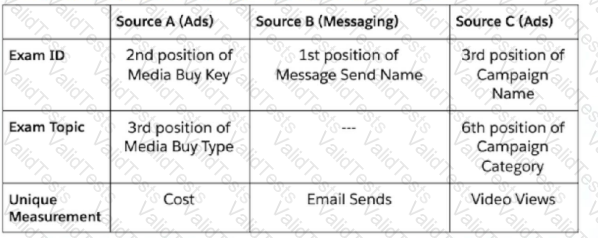
As can be seen from the table, there are in fact two fields that hold a certain connection: Exam ID and Exam Topic. The connection indicates that
where an Exam ID is found - a single Exam Topic value is associated with it.
The client has a requirement to be able to view measurements from all data sources sliced by Exam Topic values, as seen in the following
example:

The client suggested to create, without any mapping manipulations, several patterns via the harmonization center that will generate two
Harmonized Dimensions:
Exam ID
Exam Topic
Given the above information, which statement is correct regarding the ability to implement this request with the above suggestion?
What is the relationship between "Media Buy Key" and "Creative Key?
Which two statements are correct regarding variable Dimensions in marketing Cloud intelligence’s data model?
A client has integrated data from Facebook Ads, Twitter Ads, and Google Ads in Marketing Cloud Intelligence. For each data source, the data
follows a naming convention as shown below:
Facebook Ads Naming Convention - Campaign Name:
Camp|D_CampName#Market_Objective#TargetAge_TargetGender
Twitter Ads Naming Convention - Media Buy Name:
Market|TargetAge|Objective|OrderID
' Google Ads Naming Convention - Media Buy Name:
Buying Type_Market_Objective
The client wants to harmonize their data on the common fields between these two platforms (i.e. Market and Objective) using the Harmonization ‘Center.
In addition to the previous details, the client provides the following data sample:
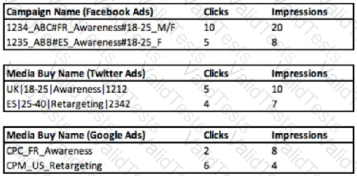
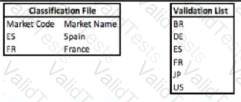
Logic specification:
If a value is not present in the Validation List, return “Not Valid”
If a value is not present in the Classification File, return “Unclassified”.
If the Harmonization center is used to harmonize the above data and files, what table will show the final output?
A)
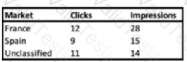
B)
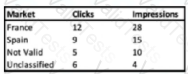
C)
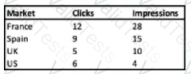
D)
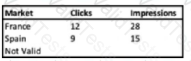
Your client provided the following sources:
Source 1:
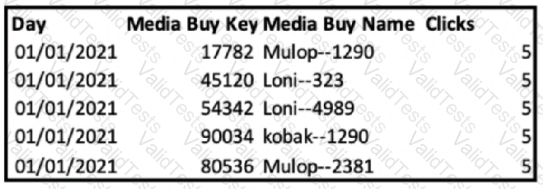
Source 2:
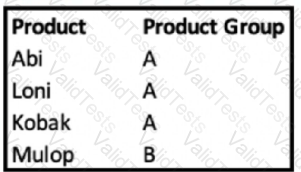
Source 3:
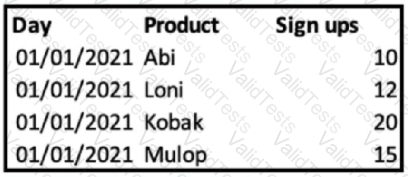
As can be seen, the Product values present in sources 2 and 3 are similar and can be linked with the first extraction from ‘Media Buy Name’ in source1
The end goal is to achieve a final view of Product Group alongside Clicks and Sign Ups, as described below:
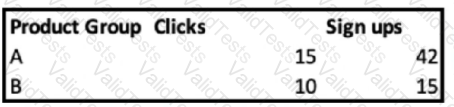
Which two options will meet the client’s requirement and enable the desired view?
An implementation engineer has been provided with 4 different source files: 03m 16s
1. Twitter Ads
2. Creative Classification
3. Placement Classification
4, Campaign Category Classification
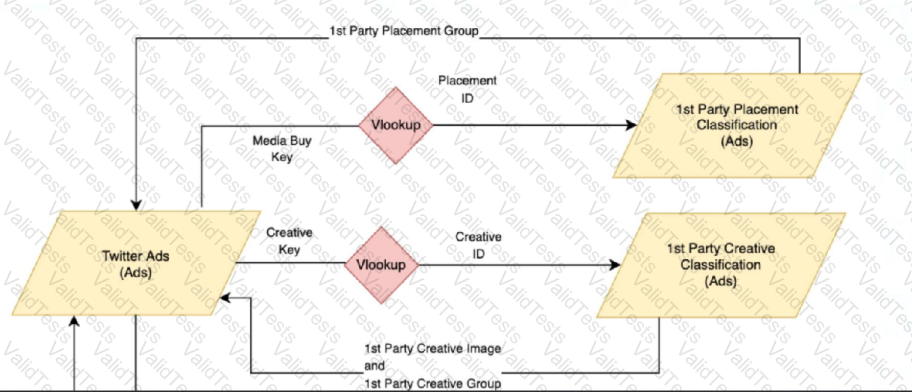
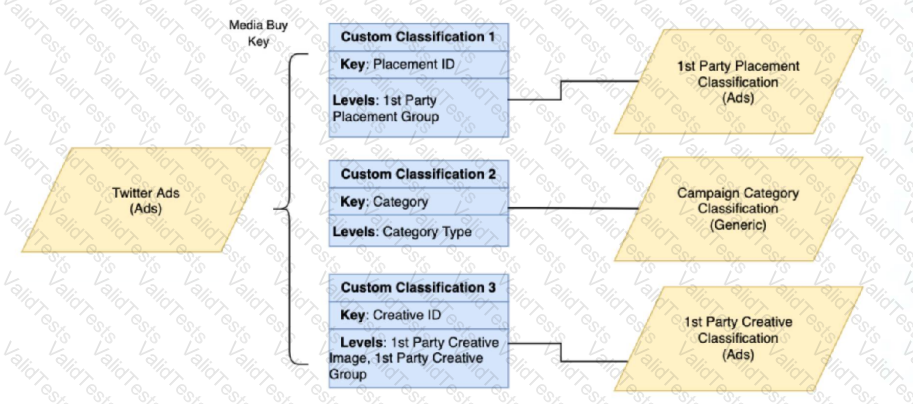
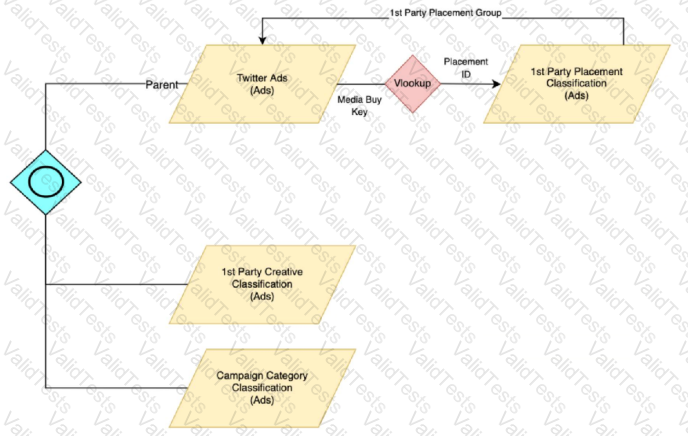
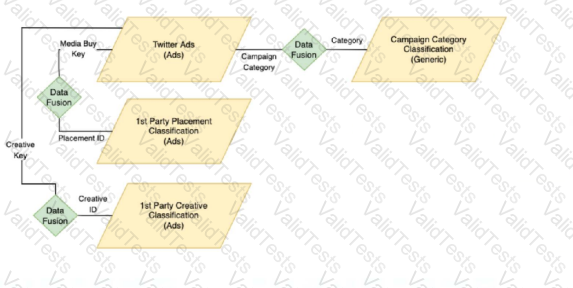
The main source is Twitter Ads (which includes various fields and KPIs), and the rest are classification files that connect to Twitter Ads and enrich different fields within it.
The connections between the files are described as follows:
1st Party Creative Classification
File structure/headers:

Creative ID — links back to Creative Key (Twitter Ads)
1st Party Placement Classification &
File structure/headers:

Category — links back to Campaign Category (Twitter Ads)
Which proposed solution meets the client's requirements for the above use case?
A)
B)
C)
D)
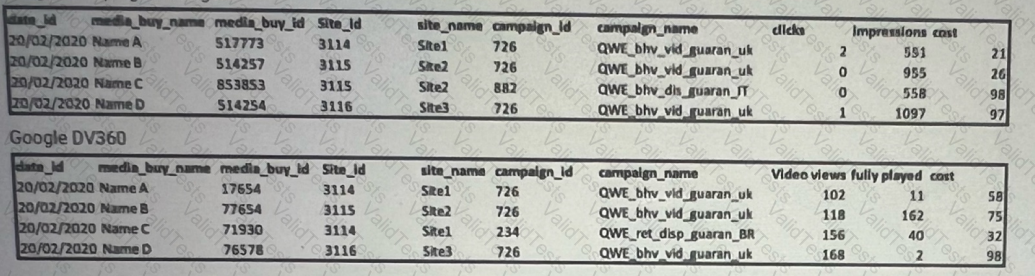
Client has provided sample flies of their data from the following data sources:
Google Campaign Manager
Below are the requirements from the client and additional information:
• The sources are linked to each other by shared Media Buy names.
• In addition-to the mutual Media Buys, the sources contain campaign and site values. However, the client would like to see the campaign/site values coming from Google CM and not from Google DV360.
• The source of truth for cost is Google DV360.
As a first step, a Parent-Child relationship was created between the two files, and the following mapping was performed, within both data streams:
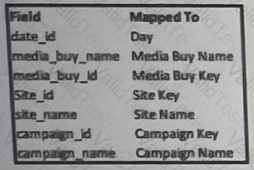
Please note:
• All other measurements were mapped as well to the appropriate fields.
• No other mapping manipulations or formulas were implemented.
How many records will the merged table hold?
An implementation engineer is requested to extract the second position
of the Campaign Name values.
The Campaign values consist of multiple delimiter types, as can be
seen in the following example:
Campaign Name: Ad15X2w&Delux_wal90
Desired value: Delux
Which three harmonization methods will achieve the desired outcome?

