Weekend Sale Certification Special Limited Time 75% Discount Offer - Ends in 0d 00h 00m 00s - Coupon code: vdt75

Pass the Cisco CyberOps Professional 300-215 Questions and answers with ValidTests

Exam 300-215 All Questions
Exam 300-215 Premium Access

View all detail and faqs for the 300-215 exam

Viewing page 6 out of 6 pages
Viewing questions 51-60 out of questions
Questions # 51:

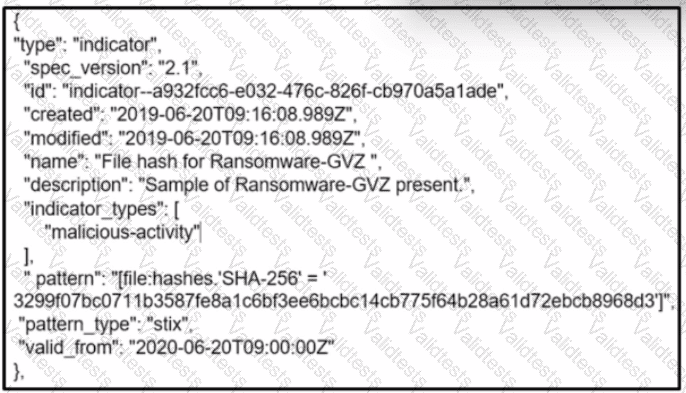
Refer to the exhibit.
Question # 51

What is the indicator of compromise?

Options:

A.

SHA256 file hash

B.

indicator ID: malware--a932fcc6-e032-476c-826f-cb970a569bce

C.

indicator type: malicious-activity

D.

MD5 file hash

Questions # 52:

In a secure government communication network, an automated alert indicates the presence of anomalous DLL files injected into the system memory during a routine update of communication protocols. These DLL files are exhibiting beaconing behavior to a satellite IP known for signal interception risks. Concurrently, there is an uptick in encrypted traffic volumes that suggests possible data exfiltration. Which set of actions should the security engineer prioritize?

Options:

A.

Invoke a classified incident response scenario, notify national defense cyber operatives, and begin containment and eradication procedures on affected systems.

B.

Conduct memory forensics to analyze the suspicious DLL files, disrupt the beaconing sequence, and assess the encrypted traffic for breach indicators.

C.

Activate a secure emergency communication channel, isolate the segments of the communication network, and initiate a threat hunting operation for further anomalies.

D.

Sever connections to the satellite IP, execute a rollback of the recent protocol updates, and engage counter-intelligence cybersecurity measures.

Questions # 53:

An organization recovered from a recent ransomware outbreak that resulted in significant business damage. Leadership requested a report that identifies the problems that triggered the incident and the security team’s approach to address these problems to prevent a reoccurrence. Which components of the incident should an engineer analyze first for this report?

Options:

A.

impact and flow

B.

cause and effect

C.

risk and RPN

D.

motive and factors

Questions # 54:

A financial company handling international transactions recently experienced a complex security incident The incident involves simultaneous DDoS attacks, suspected internal data leakage and the discovery of sophisticated malware implants that have remained dormant until triggered remotely During the incident it became clear that the current procedures are inadequate and plans to tackle issues were created on the go To counter this problem going forward, the IR team is developing an incident playbook to be used if a similar incident reoccurs Which set of elements of the playbook must be introduced?

Options:

A.

Introducing DDoS mitigation procedures, internal data leak investigations, and proactive malware containment

B.

Establishing real-time collaboration procedures, increasing data encryption and revising access controls

C.

Engaging third-party cybersecurity experts expanding throat intelligence sharing and improving incident documentation

D.

Enhancing monitoring protocols, updating firewall rules, and automating traffic analysis tasks efficiently

Questions # 55:

Which two tools conduct network traffic analysis in the absence of a graphical user interface? (Choose two.)

Options:

A.

Network Extractor

B.

TCPdump

C.

TCPshark

D.

Wireshark

E.

NetworkDebuggerPro

Questions # 56:

Snort detects traffic that is targeting vulnerabilities in files that belong to software in the Microsoft Office suite. On a SIEM tool, the SOC analyst sees an alert from Cisco FMC. Cisco FMC is implemented with Snort IDs. Which alert message is shown?

Options:

A.

FILE-OFFICE Microsoft Graphics buffer overflow

B.

FILE-OFFICE Microsoft Graphics cross site scripting (XSS)

C.

FILE-OFFICE Microsoft Graphics SQL INJECTION

D.

FILE-OFFICE Microsoft Graphics remote code execution attempt

Questions # 57:

Which tool conducts memory analysis?

Options:

A.

MemDump

B.

Sysinternals Autoruns

C.

Volatility

D.

Memoryze

Questions # 58:

What describes the first step in performing a forensic analysis of infrastructure network devices?

Options:

A.

immediately disconnecting the device from the network

B.

initiating an immediate full system scan

C.

resetting the device to factory settings and analyzing the difference

D.

producing an accurate, forensic-grade duplicate of the device's data

Questions # 59:

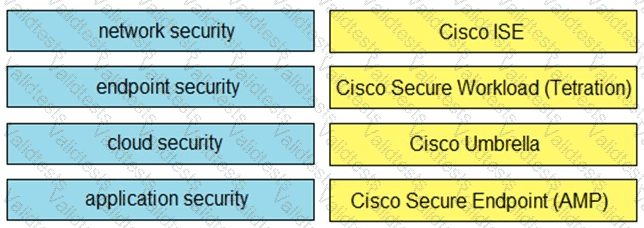
Drag and drop the capabilities on the left onto the Cisco security solutions on the right.
Question # 59

Options:

Questions # 60:

A cybersecurity analyst must identify an unknown service causing high CPU on a Windows server. What tool should be used?

Options:

A.

Volatility to analyze memory dumps for forensic investigation

B.

Process Explorer from the Sysinternals Suite to monitor and examine active processes

C.

TCPdump to capture and analyze network packets

D.

SIFT (SANS Investigative Forensic Toolkit) for comprehensive digital forensics

Viewing page 6 out of 6 pages
Viewing questions 51-60 out of questions