Pre-Summer Special Limited Time 70% Discount Offer - Ends in 0d 00h 00m 00s - Coupon code: validbest

Pass the Fortinet Network Security Expert NSE8_812 Questions and answers with ValidTests

Exam NSE8_812 All Questions
Exam NSE8_812 Premium Access

View all detail and faqs for the NSE8_812 exam

Viewing page 2 out of 4 pages
Viewing questions 11-20 out of questions
Questions # 11:

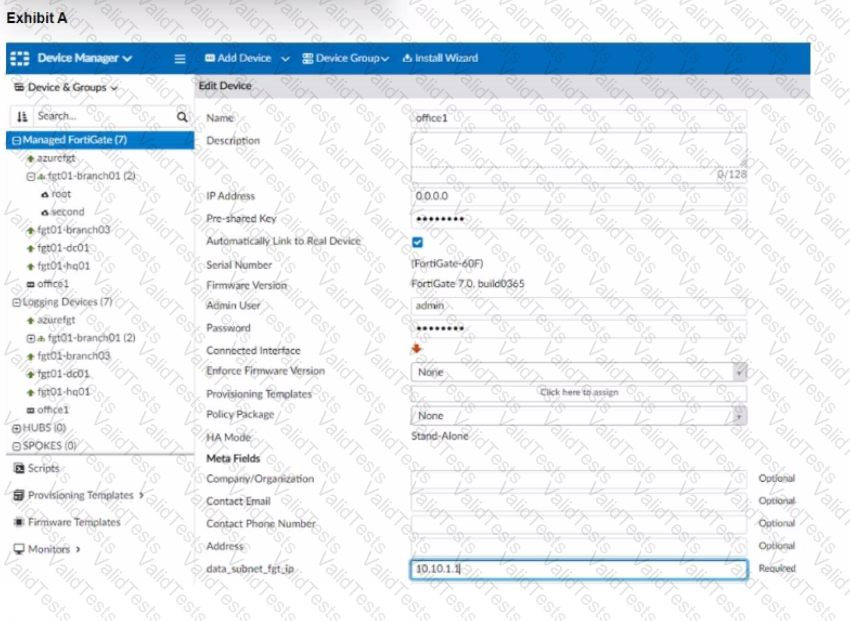
Refer to the exhibits.
Question # 11

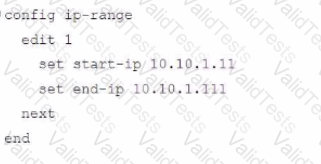
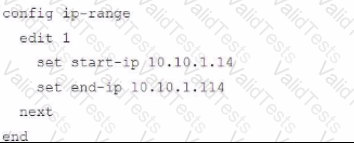
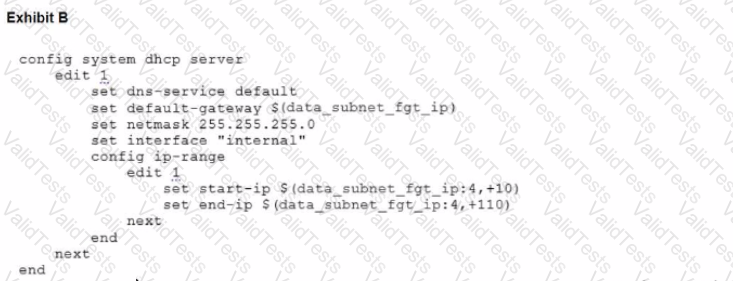
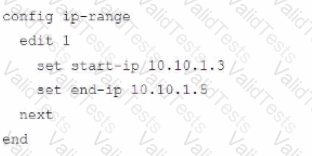
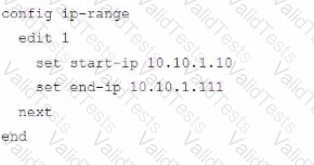
The exhibit shows a FortiGate model device that will be used for zero touch provisioning and a CLI Template.
Question # 11

To facilitate a more efficient roll out of FortiGate devices, you are tasked with using meta fields with the CLI Template to configure the DHCP server on the "office1" FortiGate.

Given this scenario, what would be the output of the config ip-range section on the CLI Template?
Options:

A.

B.

C.

D.

Expert Solution
Questions # 12:

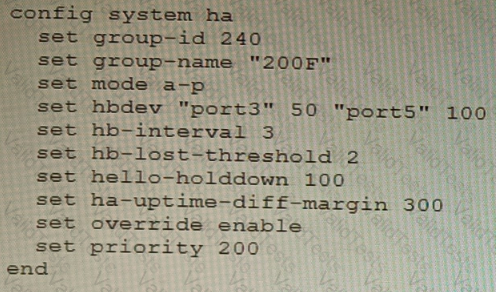
An HA topology is using the following configuration:
Question # 12

Based on this configuration, how long will it take for a failover to be detected by the secondary cluster member?

Options:

A.

600ms

B.

200ms

C.

300ms

D.

100ms

Expert Solution
Questions # 13:

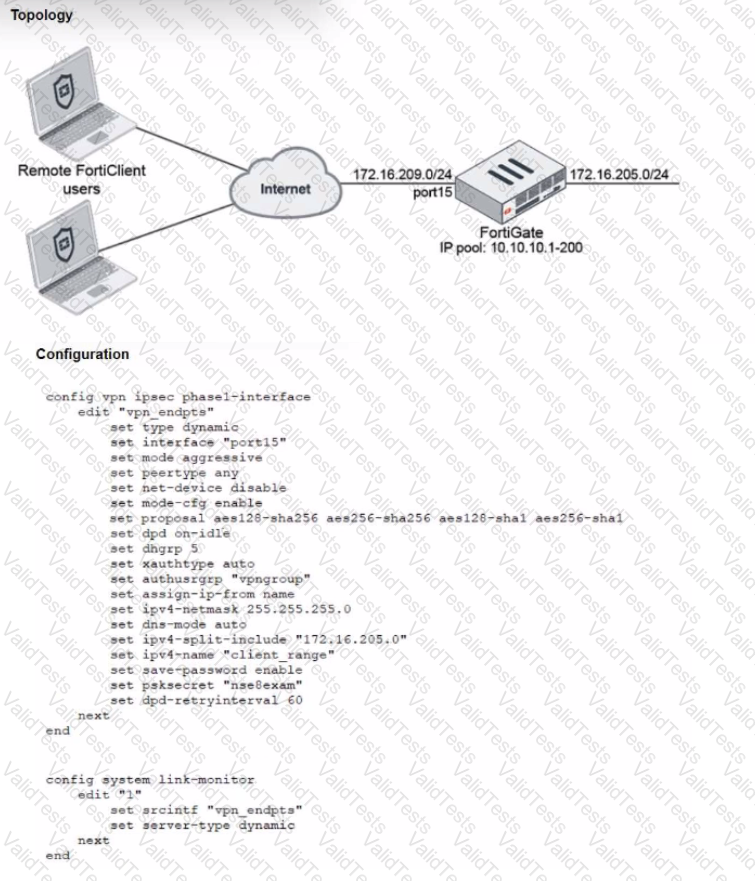
Refer to the exhibits, which show a network topology and VPN configuration.
Question # 13

A network administrator has been tasked with modifying the existing dial-up IPsec VPN infrastructure to detect the path quality to the remote endpoints.

After applying the configuration shown in the configuration exhibit, the VPN clients can still connect and access the protected 172.16.205.0/24 network, but no SLA information shows up for the client tunnels when issuing the diagnose sys link-monitor tunnel all command on the FortiGate CLI.

What is wrong with the configuration?

Options:

A.

SLA link monitoring does not work with the net-device setting.

B.

The admin needs to disable the mode-cfg setting.

C.

IPsec Phase1 Interface has to be configured in IPsec main mode.

D.

It is necessary to use the IKEv2 protocol in this situation.

Expert Solution
Questions # 14:

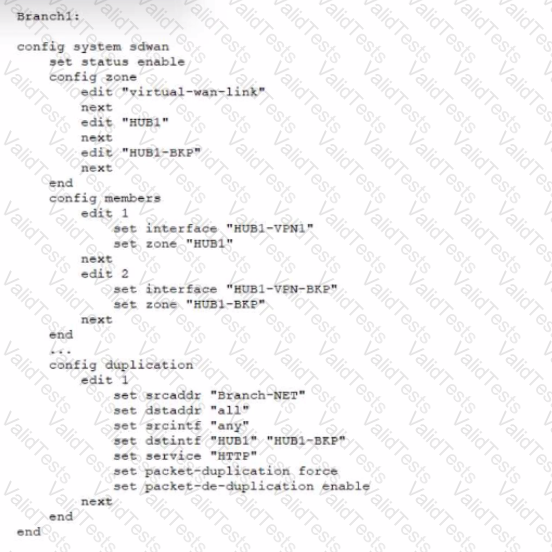
Refer to the exhibit, which shows an SD-WAN configuration.
Question # 14

You configured the SD-WAN from Branch1 to the HUB and enabled packet duplication. You later notice that the traffic is not being duplicated. In this scenario, what is causing this problem?

Options:

A.

There is a mismatch in the FortiOS version between Branch1 and HUB.

B.

Traffic cannot be duplicated over multiple zones.

C.

Packet duplication is not enabled on the HUB side.

D.

Packet duplication did not occur because an interface is out of SLA.

Expert Solution
Questions # 15:

Refer to the exhibit.

Question # 15

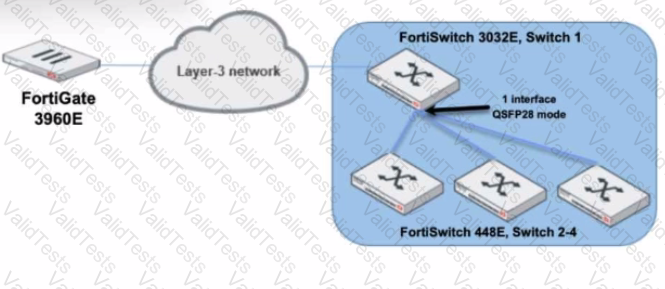
You are managing a FortiSwitch 3032E that is managed by FortiLink on a FortiGate 3960E. The 3032E is heavily utilized and there is only one port free.

The requirement is to add an additional three FortiSwitch 448E devices with 10Gbps SFP+ connectivity directly to the 3032E. The plan is to use split port (phy-mode) with QSFP28 mode to connect the new 448E switches.

In this scenario, which statement about the switch deployment is correct?

Options:

A.

Additional ports on Switch 1 can be split for a maximum of 128 interfaces.

B.

The port most of Switch 1 must be changed to QSFP.

C.

After enabling split ports and rebooting Switch 1, the new ports can be configured from the FortiGate.

D.

Switches 2-4 will connect successfully with Switch 1 split port in QSFP28 mode.

Expert Solution
Questions # 16:

Refer to the exhibit.

Question # 16

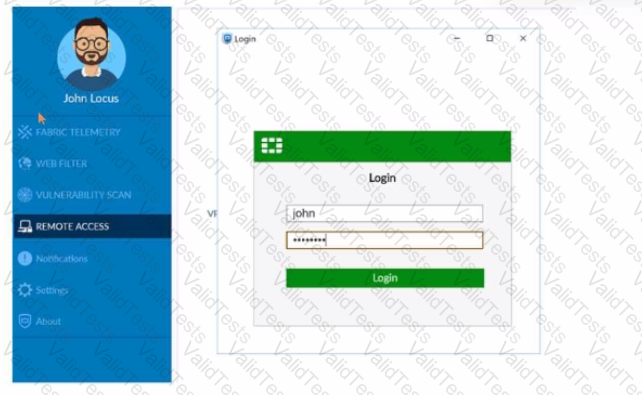
What is happening in this scenario?

Options:

A.

The user status changed at FortiClient EMS to off-net.

B.

The user is authenticating against a FortiGate Captive Portal.

C The user is authenticating against an IdP.

C.

The user has not authenticated on their external browser.

Expert Solution
Questions # 17:

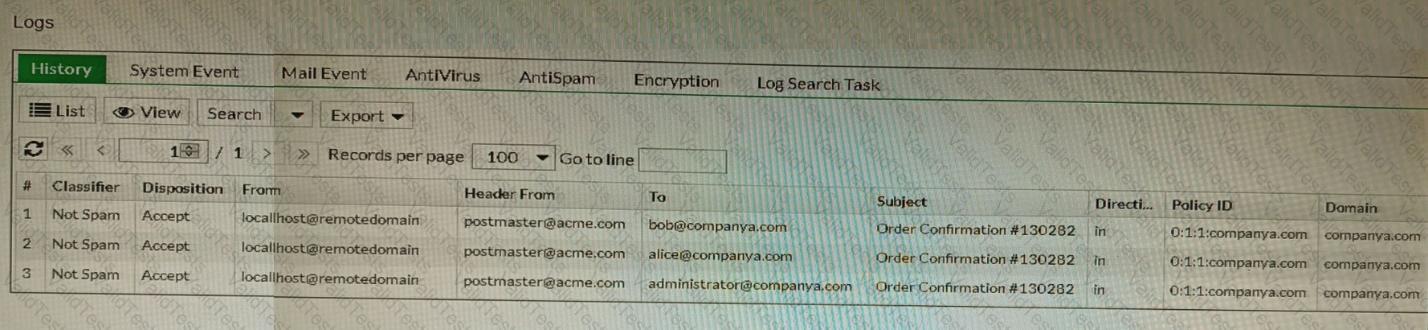
Refer to the exhibit showing the history logs from a FortiMail device.
Question # 17

Which FortiMail email security feature can an administrator enable to treat these emails as spam?

Options:

A.

DKIM validation in a session profile

B.

Sender domain validation in a session profile

C.

Impersonation analysis in an antispam profile

D.

Soft fail SPF validation in an antispam profile

Expert Solution
Questions # 18:

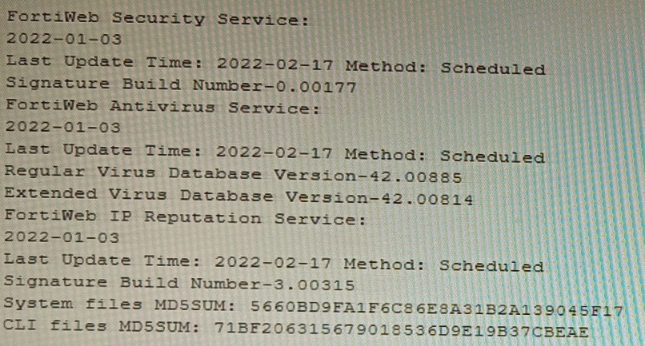
Refer to the CLI output:

Question # 18

Given the information shown in the output, which two statements are correct? (Choose two.)

Options:

A.

Geographical IP policies are enabled and evaluated after local techniques.

B.

Attackers can be blocked before they target the servers behind the FortiWeb.

C.

The IP Reputation feature has been manually updated

D.

An IP address that was previously used by an attacker will always be blocked

E.

Reputation from blacklisted IP addresses from DHCP or PPPoE pools can be restored

Expert Solution
Questions # 19:

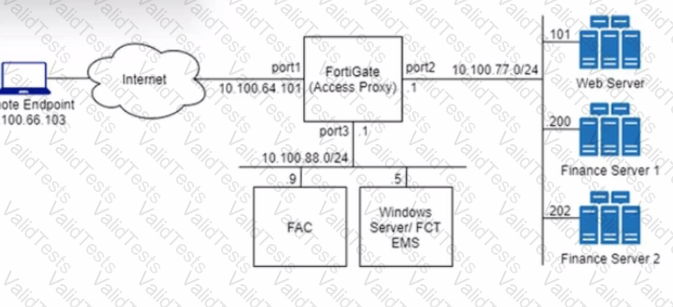
Refer to the exhibit.

Question # 19

An HTTPS access proxy is configured to demonstrate its function as a reverse proxy on behalf of the web server it is protecting. It verifies user identity, device identity, and trust context, before granting access to the protected source. It is assumed that the FortiGate EMS fabric connector has already been successfully connected.

You need to ensure that ZTNA access through the FortiGate will redirect users to the FortiAuthenticator to perform username/password and multifactor authentication to validate access prior to accessing resources behind the FortiGate.

In this scenario, which two further steps need to be taken on the FortiGate? (Choose two.)

Options:

A.

Create a SAML user/server object referring to the FortiAuthenticator.

B.

Create an authentication rule that sets the sso-auth-method to the FortiAuthenticator.

C.

Create an authentication scheme with the "method" as SAML.

D.

Create a firewall rule that allows access from the remote endpoint to the resources behind the FortiGate.

Expert Solution
Questions # 20:

Review the following FortiGate-6000 configuration excerpt:

Question # 20

Based on the configuration, which statement is correct regarding SNAT source port partitioning behavior?

Options:

A.

It dynamically distributes SNAT source ports to operating FPCs or FPMs.

B.

It is the default SNAT configuration and preserves active sessions when an FPC or FPM goes down.

C.

It statically distributes SNAT source ports to operating FPCs or FPMs

D.

It equally distributes SNAT source ports across chassis slots.

Expert Solution
Viewing page 2 out of 4 pages
Viewing questions 11-20 out of questions