MNO, Inc. is a national retail home goods chain formed of local franchisees. Each franchisee uses its own returns processing systems. A key advertising point for MNO is its liberal return policy, which is part of its overall focus on excellent customer service. While feedback from customers is positive regarding MNO’s return policy, there have been inquiries as to why stores handle returns via different processes. MNO’s supply manager suggests the implementation of a reverse supply chain to deal with this issue and possibly yield cost enhancement opportunities. In order to implement this, which of the following is the FIRST course of action the supply manager should take’’
Which of the following refers to the practice of buying a commodity on the open market for immediate delivery?
Which of the following buying strategies refers to planning inbound material purchases and flows without the need for significant inventory levels7
A supply manager negotiates a volume discount with a key supplier. The supplier will provide a discount on screws, bolts, and nuts, based on the quantity indicated on the purchase order (PO). Which of the following would be the BEST way for the buying firm to maximize the benefits of this discount?
A supply manager is seeking to align the procurement function with the organization's business strategy and growth potential. Which of the following is the BEST initial course of action to take in this instance7
BCD, Inc. owns five warehouses in various locations around the country. Three of these warehouses are performing poorly. BCD asks supply management to review options for improving this situation. Which of following is the BEST course of action for supply management to take?
A company is designing a new warehousing strategy. The firm wants to hire the most qualified personnel, utilize the best technology, and minimize the repetition of inventory across operations. Which of the following warehousing strategies will be BEST suited toward attaining the organization's goals?
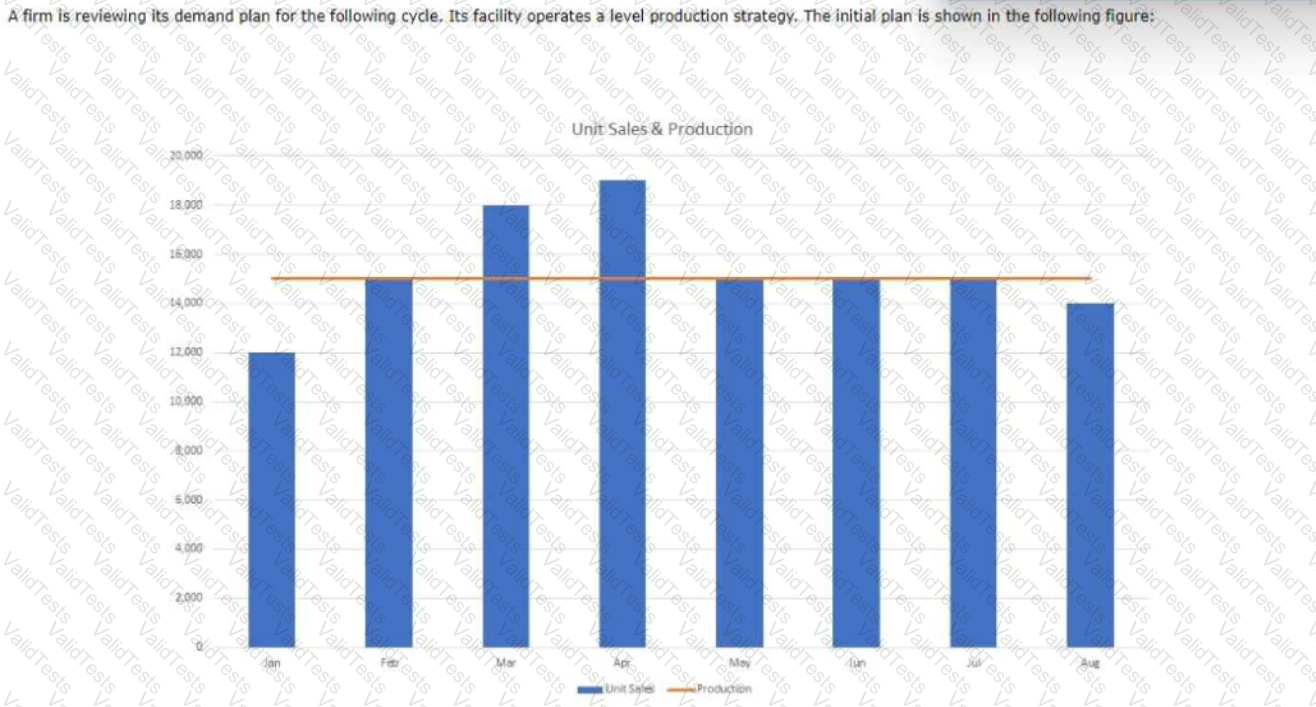
There are 10,000 units in stock for the beginning of January, and maximum inventory holding is 19,000 units. Sales are recorded at the end of the month.
Procurement receives a communication from one of its retailers that it is planning a promotional event in July. The retailer forecasts that it will require an additional 20,000 units. By how much should the level production strategy increase its monthly output of units in order to meet the requirements of the retailer and minimize overall inventory levels?
Which of the following refers to an agreement between a buyer and supplier in which vendor-owned inventory is stored on the buyer's floor until it is used in production?
The sourcing manager for a regional retail bakery chain reviews order quantities and stocking for perishable condiments on a quarterly basis. Which of the following factors should be the MOST critical consideration in this analysis?


