Pre-Summer Special Limited Time 70% Discount Offer - Ends in 0d 00h 00m 00s - Coupon code: validbest

Pass the Fortinet Certified Professional Network Security FCSS_EFW_AD-7.6 Questions and answers with ValidTests

Exam FCSS_EFW_AD-7.6 All Questions
Exam FCSS_EFW_AD-7.6 Premium Access

View all detail and faqs for the FCSS_EFW_AD-7.6 exam

Viewing page 4 out of 4 pages
Viewing questions 31-40 out of questions
Questions # 31:

A vulnerability scan report has revealed that a user has generated traffic to the website example.com (10.10.10.10) using a weak SSL/TLS version supported by the HTTPS web server.

What can the firewall administrator do to block all outdated SSL/TLS versions on any HTTPS web server to prevent possible attacks on user traffic?

Options:

A.

Configure the unsupported SSL version and set the minimum allowed SSL version in the HTTPS settings of the SSL/SSH inspection profile.

B.

Enable auto-detection of outdated SSL/TLS versions in the SSL/SSH inspection profile to block vulnerable websites.

C.

Install the required certificate in the client's browser or use Active Directory policies to block specific websites as defined in the SSL/SSH inspection profile.

D.

Use the latest certificate, Fortinet_SSL_ECDSA256, and replace the CA certificate in the SSL/SSH inspection profile.

Questions # 32:

Refer to the exhibit, which shows the VDOM section of a FortiGate device.
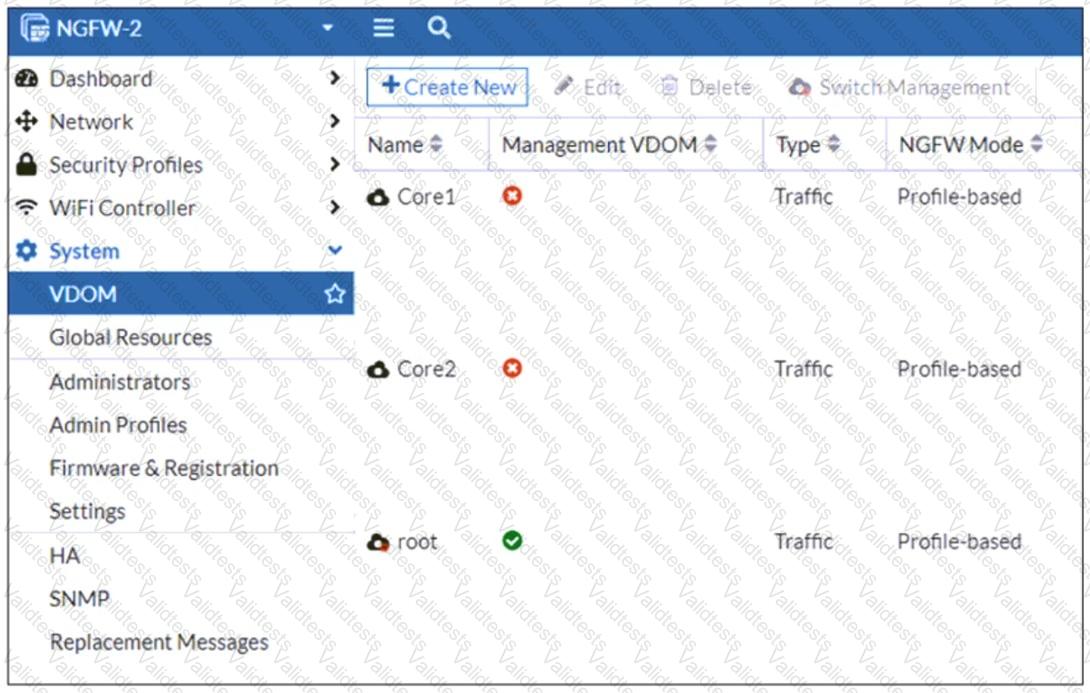
Question # 32

An administrator discovers that webfilter stopped working in Core1 and Core2 after a maintenance window.

Which two reasons could explain why webfilter stopped working? (Choose two.)

Options:

A.

The root VDOM does not have access to FortiManager in a closed network.

B.

The root VDOM does not have a VDOM link to connect with the Corel and Core2 VDOMs.

C.

The Core1 and Core2 VDOMs must also be enabled as Management VDOMs to receive FortiGuard updates

D.

The root VDOM does not have access to any valid public FDN.

Questions # 33:

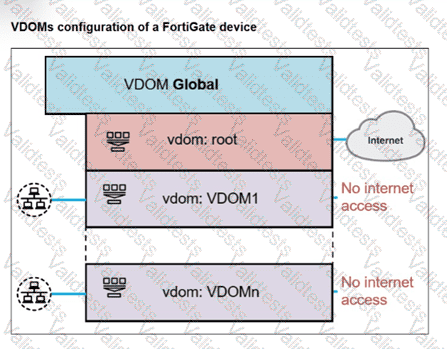
Refer to the exhibit.

Question # 33

A FortiGate segmented into VDOMs is shown. You must ensure effective and accelerated internet access for all of the VDOMs in this enterprise network. How can you achieve this? (Choose one answer)

Options:

A.

Connect a physical interface from each VDOM to the root VDOM.

B.

Create VDOM links.

C.

Configure network processing unit (NPU) vlinks.

D.

Create VLANs over network processing unit (NPU) vlinks.

Questions # 34:

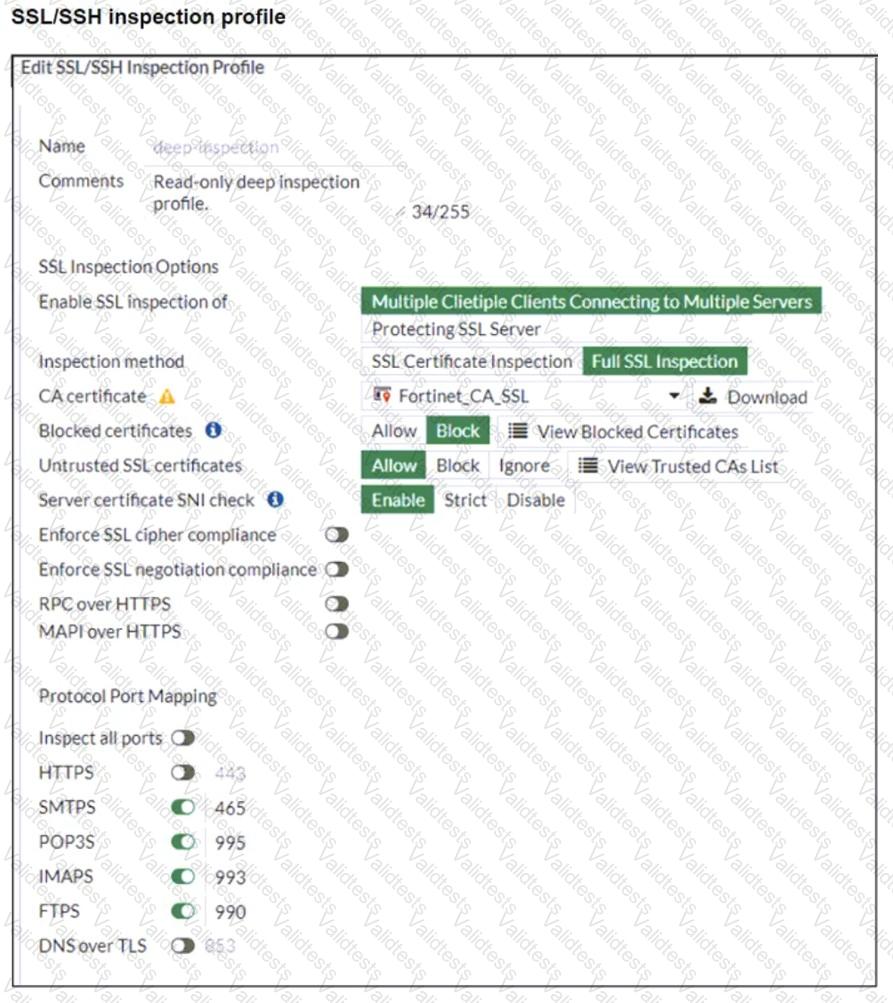
Refer to the exhibits. The exhibits show a network topology, a firewall policy, and an SSL/SSH inspection profile configuration.
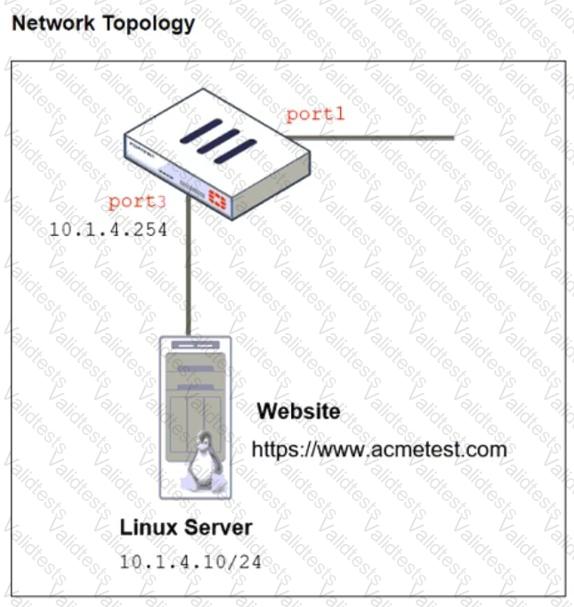
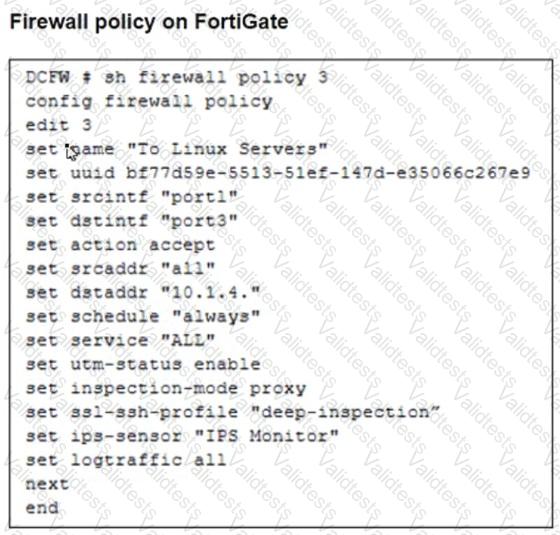
Question # 34

Question # 34

Question # 34

Why is FortiGate unable to detect HTTPS attacks on firewall policy ID 3 targeting the Linux server?

Options:

A.

The administrator must set the policy to inspection mode to analyze the HTTPS packets as expected.

B.

The administrator must enable HTTPS in the protocol port mapping of the deep- inspection SSL/SSH inspection profile.

C.

The administrator must enable SSL inspection of the SSL server and upload the certificate of the Linux server website to the SSL/SSH inspection profile.

D.

The administrator must enable cipher suites in the SSL/SSH inspection profile to decrypt the message.

Questions # 35:

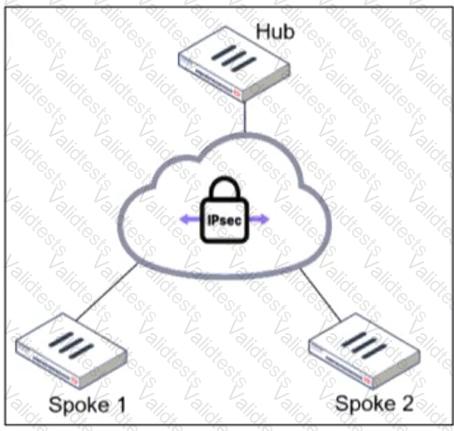
Refer to the exhibit.

Question # 35

An administrator is deploying a hub and spokes network and using OSPF as dynamic protocol.

Which configuration is mandatory for neighbor adjacency?

Options:

A.

Set bfd enable in the router configuration

B.

Set network-type point-to-multipoint in the hub interface

C.

Set rfc1583-compatible enable in the router configuration

D.

Set virtual-link enable in the hub interface

Questions # 36:

An administrator is setting up an ADVPN configuration and wants to ensure that peer IDs are not exposed during VPN establishment.

Which protocol can the administrator use to enhance security?

Options:

A.

Use IKEv2, which encrypts peer IDs and prevents exposure.

B.

Opt for SSL VPN web mode because it does not use peer IDs at all.

C.

Choose IKEv1 aggressive mode because it simplifies peer identification.

D.

Stick with IKEv1 main mode because it offers better performance.

Questions # 37:

To secure your enterprise network traffic, which step does FortiGate perform first, when handling the first packets of a session? (Choose one answer)

Options:

A.

Installation of the session key in the network processor (NP)

B.

Decryption

C.

A reverse path forwarding (RPF) check

D.

IP integrity header checking

Questions # 38:

Refer to the exhibits.

The firewall policy ID 1 of the DCFW policy package and the reinstall preview window for the DCFW policy package installation are shown.

Why is FortiManager installing set srcaddr " SSLVPN_tunnel_addr1 " on firewall policy ID 1 when the policy package DCFW has the source address 10.0.5 on the firewall policy ID 1?

Options:

A.

The reinstall policy package ignores recent changes to the policy layer. The administrator must run the Install Wizard.

B.

FortiManager is installing the global policy package, which has higher priority than the ADOM policy package.

C.

FortiManager has assigned firewall HQ-DCFW a CLI template that can overwrite configurations at the policy layer.

D.

The firewall policy and reinstall preview use the same addresses, but they have different names because of per-device mapping.

Questions # 39:

What action can be taken on a FortiGate to block traffic using IPS protocol decoders, focusing on network transmission patterns and application signatures?

Options:

A.

Use the DNS filter to block application signatures and protocol decoders.

B.

Use application control to limit non-URL-based software handling.

C.

Enable application detection-based SD-WAN rules.

D.

Configure a web filter profile in flow mode.

Questions # 40:

Why do the firewall policy and reinstall preview show different address names during installation?

Options:

A.

Address mismatch

B.

Per-device mapping

C.

Object corruption

D.

Policy conflict

Viewing page 4 out of 4 pages
Viewing questions 31-40 out of questions