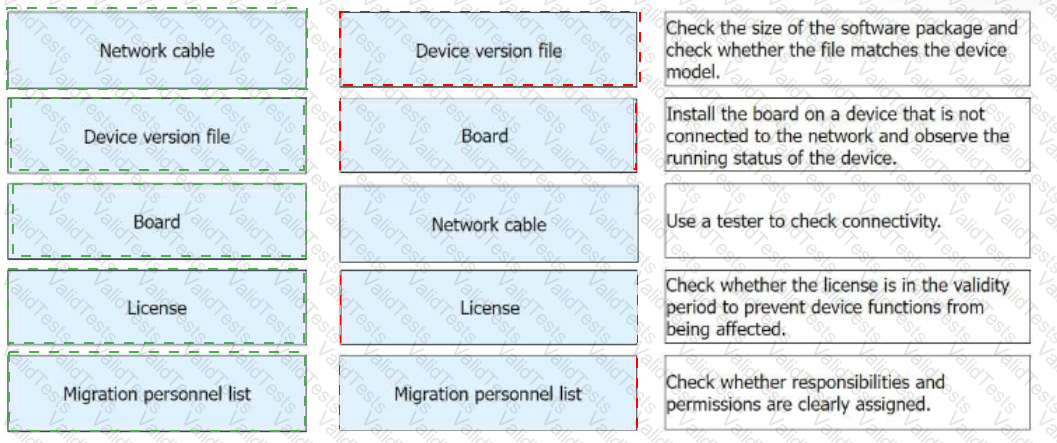
On the network shown in the figure, an administrator first completes the routing configuration and then enables MPLS and LDP on R1, R2, and R3 and their interconnected interfaces. In this manner, traffic from PC1 to PC2 can be forwarded based on MPLS. Which of the following routing configurations can implement this function?
Options:
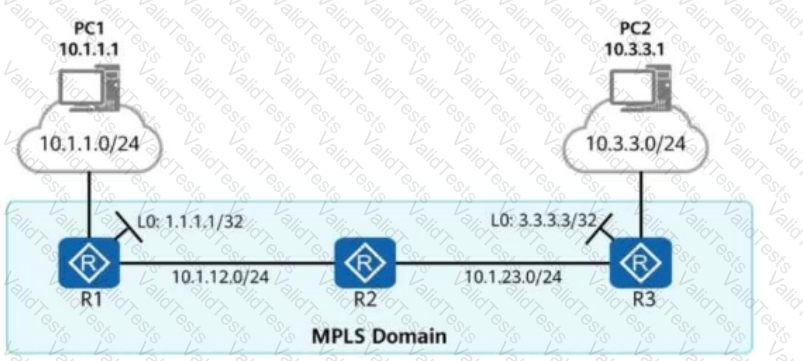
In the preparation phase of a migration project, the software and hardware need to be checked. Match the operation objects in the preparation phase with the corresponding operation contents.
A network engineer obtains a multicast data frame whose destination MAC address is 01-00-5e-00-01-01. Given this, which of the following cannot be the destination IPv4 address of this frame?
Options:
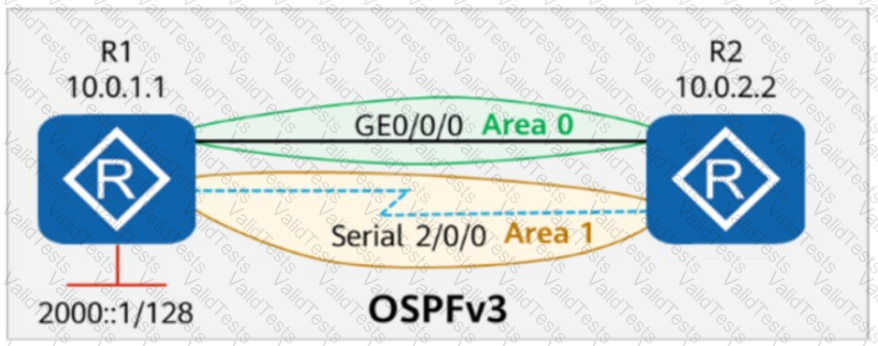
On the OSPFv3 network shown in the figure, area 1 is an NSSA. R1 imports the external route 2000::1/128 to OSPFv3. Which of the following LSAs are available in area 0?
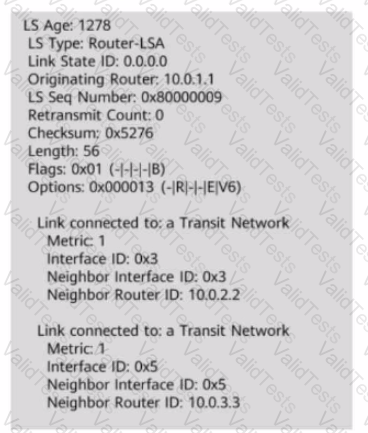
The figure shows the Router-LSA generated by a router. Which of the following statements are true based on the LSA?
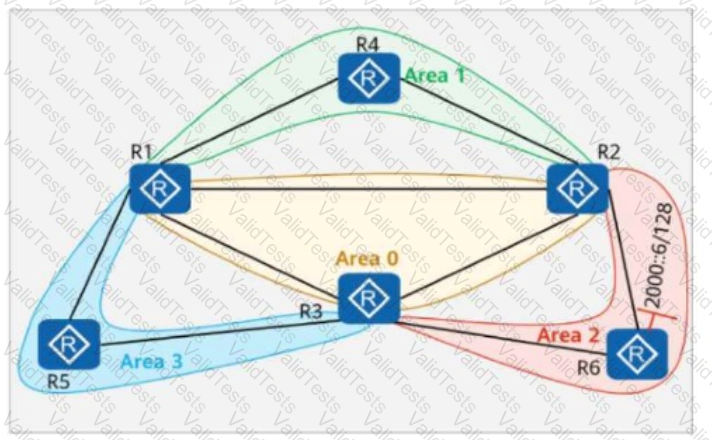
On the OSPFv3 network shown in the figure:
Area 1 is a stub area, Area 2 is a common area, and Area 3 is an NSSA (Not-So-Stubby Area).
The IPv6 address of Loopback0 on R6 is 2000::6/128.
The router ID of each router is 10.0.X.X, where X is the router number.
The stub no-summary command is configured in Area 1 on R2.
Which of the following statements is true?
During an attempt to log in to a NetEngine AR6120 through the console port, the network engineer finds that the password is incorrect and the login fails. If a Telnet account can be used to log in to the device and the account has the permission to change the console port password, the network engineer can log in to the device through Telnet to change the console port password.
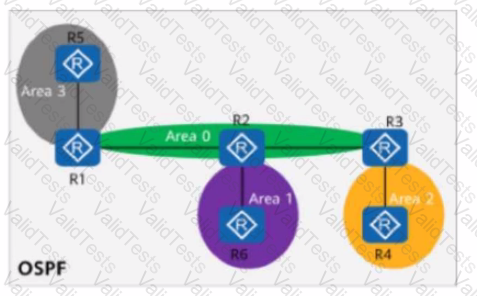
On the OSPF network shown in the figure, area 1 is a stub area, area 2 is a totally stub area, and area 3 is an NSSA. Which of the following LSAs does not exist in areas 1, 2, and 3?
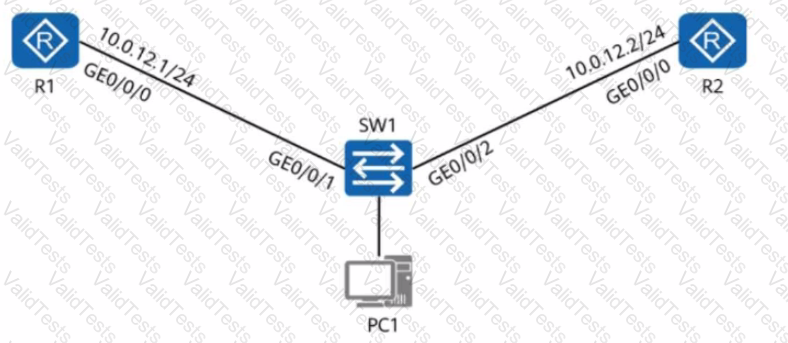
On the network shown in the figure, VRRP is configured on Rl and R2, and the virtual IP address is 10.0.12.254. After the configuration is complete, the network engineer checks the VRRP status on R1 and R2, and finds that both devices are in the Master state. Which of the following is not a possible cause of this problem?
On the OSPFv3 network shown in the figure:
OSPFv3 is enabled on the interfaces connecting R1, R2, and R3.
The router ID of each router is 10.0.X.X, where X is the number of the router.
When checking detailed information about an LSA on R3, the command output shows that the LSA is generated by R2 and describes the IPv6 prefix address associated with the Network-LSA.
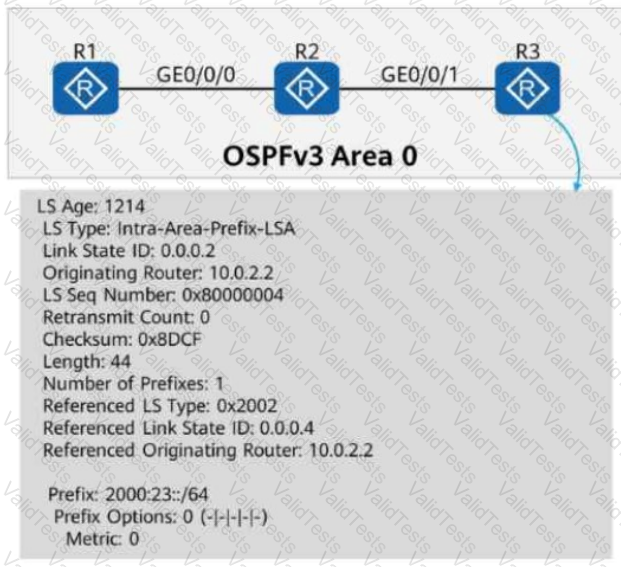
Based on this information, which of the following statements is correct?