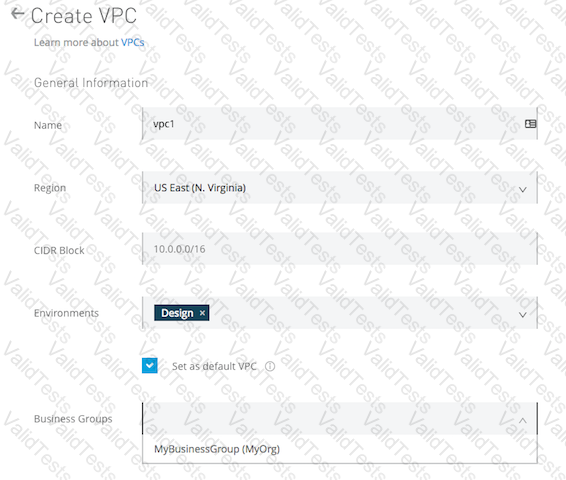
Which two statements are true about the technology architecture of an Anypoint Virtual Private Cloud (VPC)?
Choose 2 answers
An API implementation is deployed to CloudHub.
What conditions can be alerted on using the default Anypoint Platform functionality, where the alert conditions depend on the end-to-end request processing of the API implementation?
What do the API invocation metrics provided by Anypoint Platform provide?
Which of the following best fits the definition of API-led connectivity?
Refer to the exhibit.
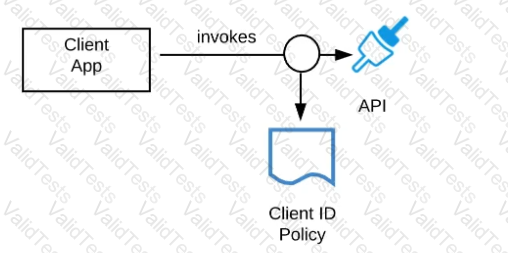
A developer is building a client application to invoke an API deployed to the STAGING environment that is governed by a client ID enforcement policy.
What is required to successfully invoke the API?
An organization wants to make sure only known partners can invoke the organization's APIs. To achieve this security goal, the organization wants to enforce a Client ID Enforcement policy in API Manager so that only registered partner applications can invoke the organization's APIs. In what type of API implementation does MuleSoft recommend adding an API proxy to enforce the Client ID Enforcement policy, rather than embedding the policy directly in the application's JVM?
In which layer of API-led connectivity, does the business logic orchestration reside?
A company is using an on-prem cluster in the data center as a runtime plane and MuleSoft-hosted control plane.
How can the company monitor the detailed performance metrics on the Mule applications deployed to the cluster from the control plane?
What is true about the technology architecture of Anypoint VPCs?
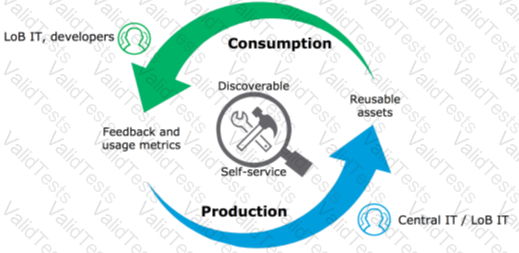
Which of the below, when used together, makes the IT Operational Model effective?


 Diagram, arrow
Description automatically generated
Diagram, arrow
Description automatically generated