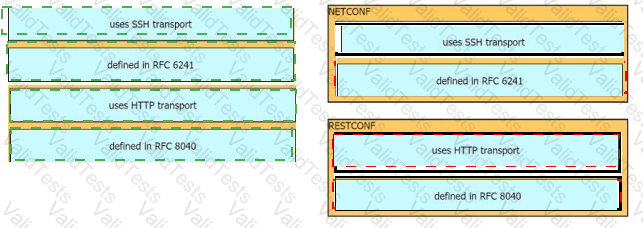
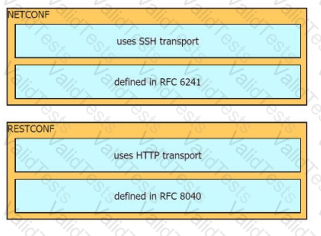
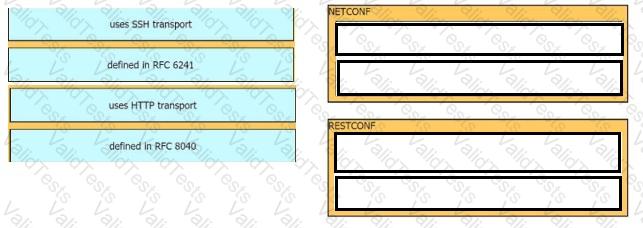
Drag and drop the characteristics from the left onto the configuration protocols they describe on the right.
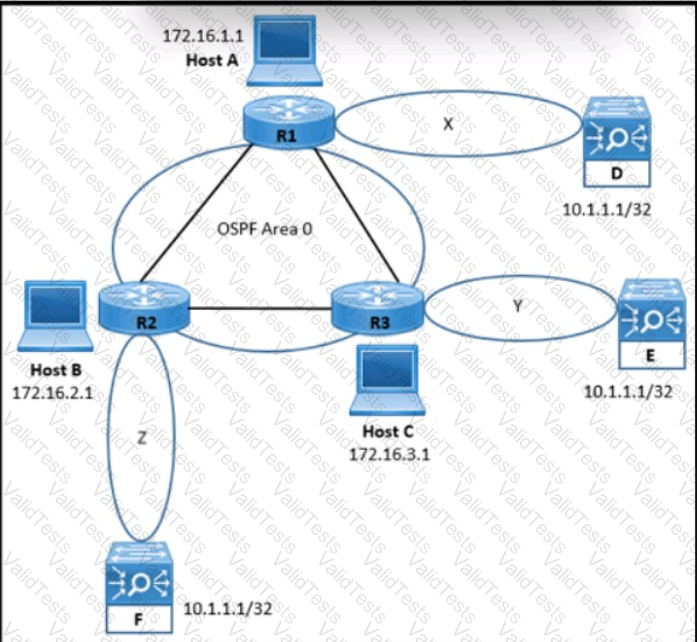
Refer to the exhibit. An engineer is designing an OSPF solution for a customer. The design must take into consideration:
Application load balancers D. E. and F are in different geographical locations and are OSPF-enabled.
Hosts A, B. and C connect to an application through the load balancers using IP address 10.1.1.1/32.
In the event of a failure of one of the load balancers, hosts must still have access to the application.
Which solution must the engineer choose?
Which feature minimizes HOC connections and reduces strain on the vSmart controller m an SO-WAN architecture?
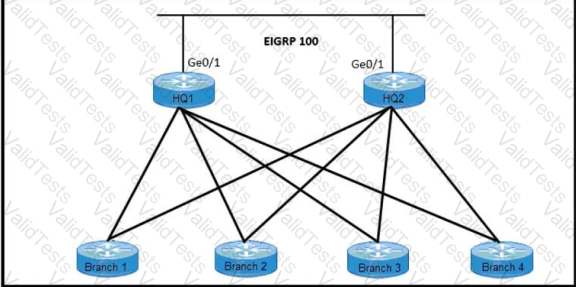
Refer to the exhibit. An architect must create a stable and scalable EIGRP solution for a customer. The design must:
•conserve bandwidth, memory, and CPU processing
•prevent suboptimal routing
•avoid any unnecessary queries
Which two solutions must the architect select? (Choose two.)
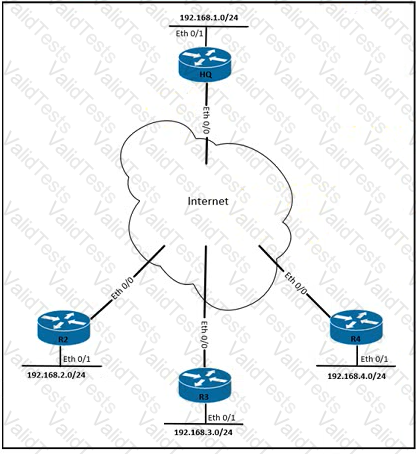
Refer to the exhibit A customer wants to adopt a dynamic site-to-site VPN solution to secure communication for VoIP, video, and FTP traffic between the remote branches and the headquarters. The customer also wants the branches to communicate directly, thereby reducing traffic at the headquarters location. The solution must consider that the branch routers are limited in available memory. Which VPN solution meets these requirements?
When expanding an existing Cisco SD-Access network, in addition to the control plane, which two device roles are needed to create an additional fabric site? (Choose two.)
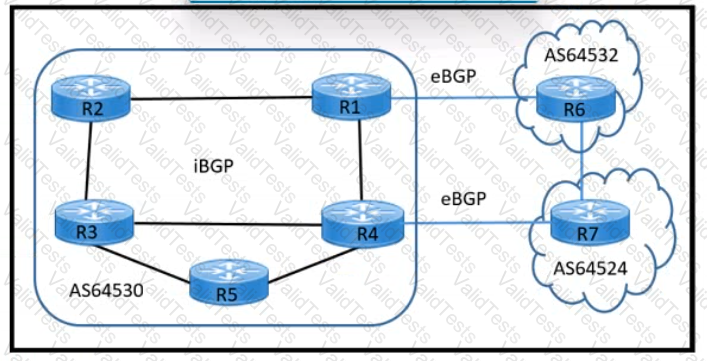
Refer to the exhibit. A network engineer must design a BGP solution based on:
The route reflector must have one or more direct physical connections to the core routers (R3 and R4).
The route reflector must have full redundancy and avoid a single point of failure.
R2 to R1 link utilization is 90%. and the remaining links are less than 50% utilized.
Which two solutions must the design Include? (Choose two.)
What is a challenge of the SaaS model?
An engineer must propose a QoS architecture model that allows an application to inform the network of its traffic profile and to request a particular type of service to support its bandwidth and delay requirements. The application requires consistent and dedicated bandwidth end to end. Which QoS architecture model meets these requirements?
A network engineer is redesigning a company's QoS solution. The company is currently using IP Precedence, but the engineer plans to move to DiffServ. It is important that the new solution provide backward compatibility with the current solution. Which technology should the design include?